We use cookies, including third-party cookies from Google to serve personalized ads through AdSense, to operate this site and understand how it is used. By continuing to browse, you accept this use. See our Privacy Policy and Terms of Use for details, including how to opt out of personalized advertising.
Accept
SmartData CollectiveSmartData Collective
  • Analytics
    AnalyticsShow More
    chatgpt image jul 21, 2026, 04 34 30 pm
    4 Core Benefits of Predictive Maintenance after Vibration Analysis
    10 Min Read
    How Does Data Mining Boost Customer Satisfaction in Logistics? Harnessing Analytics for Results -- AI-generated illustration
    How Does Data Mining Boost Customer Satisfaction in Logistics? Harnessing Analytics for Results
    11 Min Read
    chatgpt image jul 13, 2026, 04 23 45 pm
    How Data Analytics Helps Companies Improve User Engagement
    19 Min Read
    chatgpt image jul 13, 2026, 03 59 46 pm
    How Data Analytics Improves Multi-Location Search Strategies
    10 Min Read
    cybersecurity efforts
    How Behavioral Analytics and AI Are Redefining Cybersecurity for Boca Raton Businesses
    14 Min Read
  • Big Data
  • BI
  • Exclusive
  • IT
  • Marketing
  • Software
Search
© 2008-25 SmartData Collective. All Rights Reserved.
Reading: Big Data: The 4 Layers Everyone Must Know
Share
Notification
Font ResizerAa
SmartData CollectiveSmartData Collective
Font ResizerAa
Search
  • About
  • Help
  • Privacy
Follow US
© 2008-23 SmartData Collective. All Rights Reserved.
SmartData Collective > Big Data > Big Data: The 4 Layers Everyone Must Know
Big DataExclusive

Big Data: The 4 Layers Everyone Must Know

Bernard Marr
Bernard Marr
6 Min Read
Big Data: The 4 Layers Everyone Must Know
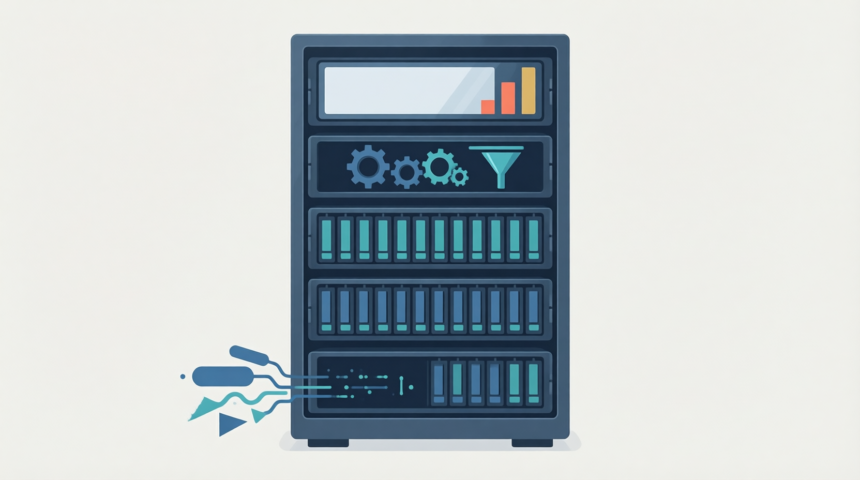
Illustration generated with Qwen Image.
SHARE

There is still so much confusion surrounding Big Data. I thought it might help to clarify the 4 key layers of a big data system – i.e. the different stages the data itself has to pass through on its journey from raw statistic or snippet of unstructured data (for example, social media post) to actionable insight.

The whole point of a big data strategy is to develop a system which moves data along this path. In this post, I will attempt to define the basic layers you will need to have in place, if you are getting to grips with how big data could help your business.

Although people have come up with different names for these layers, as we’re charting a brave new world where little is set in stone, I think this is the simplest and most accurate breakdown:

Data sources layer
More Read

Brands Invest in Data-Driven Tools to Boost Editing Workflows
Autotask and ConnectWise Prove the Benefits of AI in IT
Is Big Data The Key To Redesign-To-Cost Implementation?
Upskilling for Emerging Industries Affected by Data Science
Winners of Mozilla Open Data Competition announced

This is where the data arrives at your organization. It includes everything from your sales records, customer database, feedback, social media channels, marketing list, email archives and any data gleaned from monitoring or measuring aspects of your operations. One of the first steps in setting up a data strategy is assessing what you have here, and measuring it against what you need to answer the critical questions you want help with. You might have everything you need already, or you might need to establish new sources.

Data storage layer

This is where your Big Data lives, once it is gathered from your sources. As the volume of data generated and stored by companies has started to explode, sophisticated but accessible systems and tools have been developed – such as Apache Hadoop DFS (distributed file system), which I cover in this article – or Google File System, to help with this task. A computer with a big hard disk might be all that is needed for smaller data sets, but when you start to deal with storing (and analyzing) truly big data, a more sophisticated, distributed system is called for. As well as a system for storing data that your computer system will understand (the file system) you will need a system for organizing and categorizing it in a way that people will understand – the database. Hadoop has its own, known as HBase, but others including Amazon’s DynamoDB, MongoDB and Cassandra (used by Facebook), all based on the NoSQL architecture, are popular too. This is where you might find the Government taking an interest in your activities – depending on the sort of data you are storing, there may well be security and privacy regulations to follow.

Data processing/ analysis layer

When you want to use the data you have stored to find out something useful, you will need to process and analyze it. A common method is by using a MapReduce tool (which I also explain in a bit more depth in my article on Hadoop). Essentially, this is used to select the elements of the data that you want to analyze, and putting it into a format from which insights can be gleaned. If you are a large organization which has invested in its own data analytics team, they will form a part of this layer, too. They will employ tools such as Apache PIG or HIVE to query the data, and might use automated pattern recognition tools to determine trends, as well as drawing their conclusions from manual analysis.

Data output layer

This is how the insights gleaned through the analysis is passed on to the people who can take action to benefit from them. Clear and concise communication (particularly if your decision-makers don’t have a background in statistics) is essential, and this output can take the form of reports, charts, figures and key recommendations. Ultimately, your Big Data system’s main task is to show, at this stage of the process, how measurable improvement in at least one KPI that can be achieved by taking action based on the analysis you have carried out.

If you set up a system which works through all those stages to arrive at this destination, then congratulations! You’re in Big Data. And hopefully, ready to start reaping the benefits!

I hope this was useful? As always, please let me know your views on the topic.

—–

Finally, please check out my other posts in The Big Data Guru column and feel free to connect with me via Twitter, LinkedIn, Facebook, slideshare and The Advanced Performance Institute.

TAGGED:The Big Data Guru
Share This Article
Facebook Pinterest LinkedIn
Share
ByBernard Marr
Follow:
Bernard Marr is a best-selling author, keynote speaker, strategic performance consultant and analytics, KPI and Big Data guru.

Follow us on Facebook

Latest News

Illustration of mobile analytics dashboards with ad performance charts connected to backend databases
11 Best Sisense Alternatives for Embedded Analytics
Business Intelligence Exclusive
Analyst points at colorful circular data dashboard on screen - information technology business metrics
How Fragmented Workplace Tech Undermines Reliable Business Metrics and Reporting
Cloud Computing Exclusive Infographic IT
Using Multi-Source Data and Analytics to Detect Operational Drift Across Franchise Networks -- AI-generated illustration
Using Multi-Source Data and Analytics to Detect Operational Drift Across Franchise Networks
Exclusive Infographic
Beyond The First Impression: The Long-Lasting Impact Of Sensory Marketing -- AI-generated illustration
Beyond The First Impression: The Long-Lasting Impact Of Sensory Marketing
Infographic Marketing

Stay Connected

1.2KFollowersLike
33.7KFollowersFollow
222FollowersPin

You Might also Like

The 12+ Unmissable Big Data Stories of the Past Year
AnalyticsBig Data

The 12+ Unmissable Big Data Stories of the Past Year

8 Min Read
3 Ways Big Data Is Changing Financial Institutions Forever
AnalyticsBig DataBusiness IntelligenceData MiningDecision ManagementModelingPredictive AnalyticsSocial DataSocial Media Analytics

3 Ways Big Data Is Changing Financial Institutions Forever

8 Min Read
Analytics at Google: Great Example of Data-Driven Decision-Making
AnalyticsBig DataBusiness IntelligenceDecision ManagementStatisticsUnstructured DataWorkforce Data

Analytics at Google: Great Example of Data-Driven Decision-Making

8 Min Read
How Big Data Will Change Marketing Forever
AnalyticsBig DataBusiness IntelligenceCloud ComputingData MiningITMarketingPredictive AnalyticsSentiment AnalyticsSocial DataSocial Media AnalyticsText AnalyticsUnstructured Data

How Big Data Will Change Marketing Forever

7 Min Read

SmartData Collective is one of the largest & trusted community covering technical content about Big Data, BI, Cloud, Analytics, Artificial Intelligence, IoT & more.

5 Great Tips for Using Data Analytics for Website UX
Big Data
ai chatbot
How AI Website Chatbots Improve Customer Support and Lead Generation
Chatbots Exclusive

Quick Link

  • About
  • Contact
  • Privacy
Follow US
© 2008-26 SmartData Collective. All Rights Reserved.
Welcome Back!

Sign in to your account

Username or Email Address
Password

Lost your password?