
We use cookies, including third-party cookies from Google to serve personalized ads through AdSense, to operate this site and understand how it is used. By continuing to browse, you accept this use. See our Privacy Policy and Terms of Use for details, including how to opt out of personalized advertising.
Accept
SmartData CollectiveSmartData Collective
  • Analytics
    AnalyticsShow More: Analytics
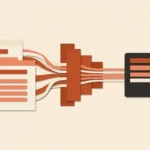
    Cut-paper editorial diagram of public web pages flowing through a terracotta volume meter into a BI budget panel.
    The Line Item Behind Public Web Data in BI: Proxy Bandwidth
    12 Min Read
    Flat editorial illustration: The article is about joining public web signals with internal business metrics so BI teams can inter
    Alternative Data in BI: Bringing Public Web Data Into Your Dashboards
    23 Min Read
    Flat editorial illustration: The article is about automating the collection, preparation, and delivery of marketing data across p
    From Data to Dashboards: 5 Marketing Reporting Automation Software Picks
    12 Min Read
    Flat editorial illustration: The article contrasts passive follower totals with a behavioral path from attention and trust to cli
    Creator Analytics Beyond Follower Count: Seven Metrics That Measure Audience Behavior
    11 Min Read
    Flat editorial illustration: The article connects AI and marketing analytics with managerial judgment grounded in consumer behavi
    How an Online MBA in Marketing Connects AI and Data Analytics
    11 Min Read
  • Big Data
  • BI
  • Exclusive
  • IT
  • Marketing
  • Software
Search
© 2008-25 SmartData Collective. All Rights Reserved.
Reading: The Amateur Data Scientist and Her Projects
Share
Notification
Font ResizerAa
SmartData CollectiveSmartData Collective
Font ResizerAa
Search
  • About
  • Help
  • Privacy
Follow US
© 2008-23 SmartData Collective. All Rights Reserved.
SmartData Collective > Data Management > Culture/Leadership > The Amateur Data Scientist and Her Projects
AnalyticsBig DataCulture/LeadershipData Management

The Amateur Data Scientist and Her Projects

vincentg64
vincentg64
5 Min Read
The Amateur Data Scientist and Her Projects
Illustration generated with FLUX.2 [klein 4B] via Cloudflare Workers AI.
SHARE

With so much data available for free everywhere, and so many open tools, I would expect to see the emergence of a new kind of analytic practitioner: the amateur data scientist.

Just like the amateur astronomer, the amateur data scientist will significantly contribute to the art and science, and will eventually solve mysteries. Could the Boston bomber be found thanks to thousands of amateurs analyzing publicly available data (images, videos, tweets, etc.) with open source tools? After all, amateur astronomers have been able to detect exoplanets and much more.

Also, just like the amateur astronomer only needs one expensive tool (a good telescope with data recording capabilities), the amateur data scientist only needs one expensive tool (a good laptop and possibly subscription to some cloud storage/computing services).

Amateur data scientists might earn money from winning Kaggle contests, working on problems such as identifying a Bonet, explaining the stock market flash crash, defeating Google page-ranking algorithms, helping find new complex molecules to fight cancer (analytical chemistry), predicting solar flares and their intensity. Interested in becoming an amateur data scientist? Here’s a first project for you, to get started:

More Read

Interactive Intelligence Doubles Down on Cloud Computing
SAS Unifies Big Data for Business and IT
4 Ways to Increase the Security of Wearable Devices
Tips for Exploring Financial Data with Business Intelligence
Big Data Will Revolutionize Learning

First project: Do large meteors cause multiple small craters or a big one?

If meteors usually break up into multiple fragments, or approach the solar system already broken down into several pieces, they might be less dangerous than if they hit with a single, huge punch. That’s the idea, although I’m not sure if this assumption is correct. Even if the opposite is true, it still worth asking the question about frequency of binary impact craters.

data science

About to hit Earth

Eventually, the knowledge that meteorites arrive in pieces rather than intact could change government policies and priorities, and maybe stop spending money on projects to detect and blow up meteors (or the other way around).

So how would you go about estimating the chance that a large meteor (hitting Earth) creates multiple small impacts? And how many impacts on average: 2, or 3? An idea consists in looking at Moon craters and checking how many of them are aligned. Yet what causes meteors to explode before hitting (and thus creating multiple craters) is Earth’s thick atmosphere. Thus, Moon would not provide good data. Yet Earth’s crust is so geologically active that all crater traces disappear after a few million years. Maybe Venus would be a good source of data? Nope, even worse than Earth. Maybe Mars? Nope, just like Moon. Maybe some moons from Jupiter or Saturn would be great candidates.

analytics

Double impact, seen million years later

Once a data source is identified and the questions answered, deeper questions can be asked, such as: when we see a binary crater (two craters, same meteor), what is the average distance between the two craters? This will also help better assess population risks, and how many billion dollars NASA should spend on meteor tracking programs.

In any case, as a starter, I did a bit of research and found the following data, with a map showing impact craters on Earth.

Visually, with the naked eye, it looks like multiple impacts (e.g. binary craters), and crater alignment, is the norm, not the exception. But the brain can be very lousy at detecting probabilities. So a statistical analysis is needed. Note that the first step consists in processing the image to detect craters and extract coordinates, using some software or writing your own code. But this is still something a good amateur data scientist could do, I’m sure you can find the right tools on the Internet.

A better idea might be to use some public data I published a while back: it is more comprehensive, already in Excel format, and also has dates attached to craters, so that binary craters created on the same year are likely to be true twins (that is, coming from a single piece of space rock that broke into two fragments sometimes in the past, before hitting Earth). 

Google ‘binary craters on Earth’ for additional info.

Share This Article
Facebook Pinterest LinkedIn
Share

Follow us on Facebook

Latest News

Cut-paper scene of split mobile and TV signal cards passing through a charcoal bridge and vermilion reconciliation gates.
Data Fragmentation and Measurement Gaps in Programmatic
Big Data Exclusive
Cut-paper editorial scene of labeled data cards passing through a charcoal inspection frame and vermilion quality gates.
How to Measure Data Annotation Quality Before Release
Big Data Exclusive
Cut-paper editorial diagram of service callback tickets moving through a terracotta sorter into rising scorecard bars.
Why Your Redo Jobs Hold the Best Data in Your Franchise
Big Data Data Collection Exclusive
Cut-paper editorial diagram of public web pages flowing through a terracotta volume meter into a BI budget panel.
The Line Item Behind Public Web Data in BI: Proxy Bandwidth
Big Data Business Intelligence Exclusive Web Analytics

Stay Connected

1.2KFollowersLike
33.7KFollowersFollow
222FollowersPin

You Might also Like

The 5 Best Methods Utilized for Data Collection
Data Collection

The 5 Best Methods Utilized for Data Collection

5 Min Read
Big Data Research
Best PracticesBig Data

Why You Need A Methodology For Your Big Data Research

6 Min Read
Transform Training
Big DataWorkforce Data

7 Ways Big Data Can Transform Training

8 Min Read
Where Do You Draw the Line Between Relevancy and Privacy?
Big DataMarketing AutomationPrivacySocial Data

Where Do You Draw the Line Between Relevancy and Privacy?

4 Min Read

SmartData Collective is one of the largest & trusted community covering technical content about Big Data, BI, Cloud, Analytics, Artificial Intelligence, IoT & more.

AI chatbots
AI Chatbots Can Help Retailers Convert Live Broadcast Viewers into Sales!
Chatbots
How To Get An Award Winning Giveaway Bot
Big Data Chatbots Exclusive

Quick Link

  • About
  • Contact
  • Privacy
Follow US
© 2008-26 SmartData Collective. All Rights Reserved.
Welcome Back!

Sign in to your account

Username or Email Address
Password

Lost your password?