We use cookies, including third-party cookies from Google to serve personalized ads through AdSense, to operate this site and understand how it is used. By continuing to browse, you accept this use. See our Privacy Policy and Terms of Use for details, including how to opt out of personalized advertising.
Accept
SmartData CollectiveSmartData Collective
  • Analytics
    AnalyticsShow More
    What Kind of Problem-Solving Distinguishes Data Analysts From Software Engineers -- AI-generated illustration
    What Kind of Problem-Solving Distinguishes Data Analysts From Software Engineers
    7 Min Read
    chatgpt image jul 21, 2026, 04 34 30 pm
    4 Core Benefits of Predictive Maintenance after Vibration Analysis
    10 Min Read
    How Does Data Mining Boost Customer Satisfaction in Logistics? Harnessing Analytics for Results -- AI-generated illustration
    How Does Data Mining Boost Customer Satisfaction in Logistics? Harnessing Analytics for Results
    11 Min Read
    chatgpt image jul 13, 2026, 04 23 45 pm
    How Data Analytics Helps Companies Improve User Engagement
    19 Min Read
    chatgpt image jul 13, 2026, 03 59 46 pm
    How Data Analytics Improves Multi-Location Search Strategies
    10 Min Read
  • Big Data
  • BI
  • Exclusive
  • IT
  • Marketing
  • Software
Search
© 2008-25 SmartData Collective. All Rights Reserved.
Reading: Privacy Concerns Could Hinder Personalization of Web Based Applications
Share
Notification
Font ResizerAa
SmartData CollectiveSmartData Collective
Font ResizerAa
Search
  • About
  • Help
  • Privacy
Follow US
© 2008-23 SmartData Collective. All Rights Reserved.
SmartData Collective > Data Management > Policy and Governance > Privacy Concerns Could Hinder Personalization of Web Based Applications
Big DataExclusiveITPolicy and GovernancePrivacySecurity

Privacy Concerns Could Hinder Personalization of Web Based Applications

Ryan Kh
Ryan Kh
5 Min Read
Privacy Concerns Could Hinder Personalization of Web Based Applications
Illustration generated with Qwen Image.
SHARE

Consumers have been concerned about privacy since the early days of Internet. In 2006, Newsweek published the results of a poll that found that 53% of American adults felt that the National Security Administration (NSA) had gone too far with collecting phone data of US citizens. This was seven years before Edward Snowden revealed the extent of their data collecting activities.

Contents
  • Find out what types of data customers are comfortable sharing
  • Giver customers control over personalization settings
  • Inform customers about the identification of certain types of data

Internet privacy concerns have become more elevated in recent years. In March, Pew Research Center conducted a poll that found 91% of people felt consumers had lost control their personal data. In 2017, a similar survey found that only 9% of people were confident that social media companies would protect their online privacy.

What does this mean for the future of personalization for web-based services? It will all boil down to a few things:

  • The sensitivity of the data customers need to get a personalized website experience.
  • Their confidence that the data will not be breached.
  • Their belief that data will be properly anonymized, so that it can’t be traced back to them in the event of a breach.

Most surveys have found that people are still supportive of website personalization, provided that it yields better user experience. However, it will be up to companies to influence the optics.

More Read

Using AI to Optimize Cybersecurity Apps in the Remote Working Era
An Ode to Disruption: Social Media’s Impact on Research-As-Usual
Death and Taxes
Emotion Reading Technology Matures
How to Use Big Data to Improve Your Website’s SEO

Here are some changes that organizations will need to make as they develop web personalization strategies around their customer concerns.

Find out what types of data customers are comfortable sharing

Some data may seem benign to most people. They may not mind that you use geographic personalization tokens to talk about opportunities and events in their area or other local content that may be of interest to them. They are also more willing to share data for help desk services. However, some customers may be a lot more concerned about you tracking their purchases. A lot of customers tend to feel that their purchases are more private and shouldn’t be tracked by the brands that they work with.

So, what types of data should you track and use for your personalization campaigns? Unfortunately, there isn’t a clear answer. All customers have their own standards of comfort. You will need to get their feedback. Don’t make any assumptions. I used to assume that my colleagues in the web profession would be more open to sharing relevant data, because they would understand how anonymization tokens worked. However, that is not always the case. Many of them seemed particularly cautious about sharing their data, because they worried more than the average person about how it could be used.

Giver customers control over personalization settings

It is a good idea to ask customers specifically what types of information they would like to have tracked and used for personalization. You should mention the following:

  • You can stop collecting this data at any time at their request.
  • The reasons that this type of data is helpful for web personalization.
  • That they can change their personalization settings at their leisure.

This doesn’t necessarily limit the type of data that hackers will have access to if your site is compromised. However, it does customers a greater sense of control over their data, which will help set their minds at ease. They will at least feel that they are the ones that decide how their data will be risked.

You should also make sure that your settings are compliant with the GDPR if you will have any customers from Europe.

Inform customers about the identification of certain types of data

There are a lot of different types of data. Some data is going to be a lot more personal than others. Other types of data won’t be attached to any individual.

You need to inform customers about the likelihood that a piece of data will be connected to them. Let them know what some types of data will based on cookies on their own machine, so it won’t be connected to them during a security breach. The only way that a hacker would know about it would be if their own machine was compromised.

However, some customers may not be as confident in these responses, because they don’t understand the technology behind it. You will need to do your best to assure them that most data won’t be personally connected to them.


TAGGED:data personalizationprivacy concernsweb-based applications
Share This Article
Facebook Pinterest LinkedIn
Share
ByRyan Kh
Follow:
Ryan Kh is an experienced blogger, digital content & social marketer. Founder of Catalyst For Business and contributor to search giants like Yahoo Finance, MSN. He is passionate about covering topics like big data, business intelligence, startups & entrepreneurship. Email: ryankh14@icloud.com

Follow us on Facebook

Latest News

How Restaurant POS and Ordering Data Reveal Generational Customer Patterns -- AI-generated illustration
How Restaurant POS and Ordering Data Reveal Generational Customer Patterns
Exclusive Infographic
From Trucks To Data: How Telematics Can Improve Freight Transportation -- AI-generated illustration
From Trucks To Data: How Telematics Can Improve Freight Transportation
Big Data Exclusive Infographic
The Airflow Problems Hiding Inside Data Centers -- AI-generated illustration
The Airflow Problems Hiding Inside Data Centers
Big Data Exclusive Infographic
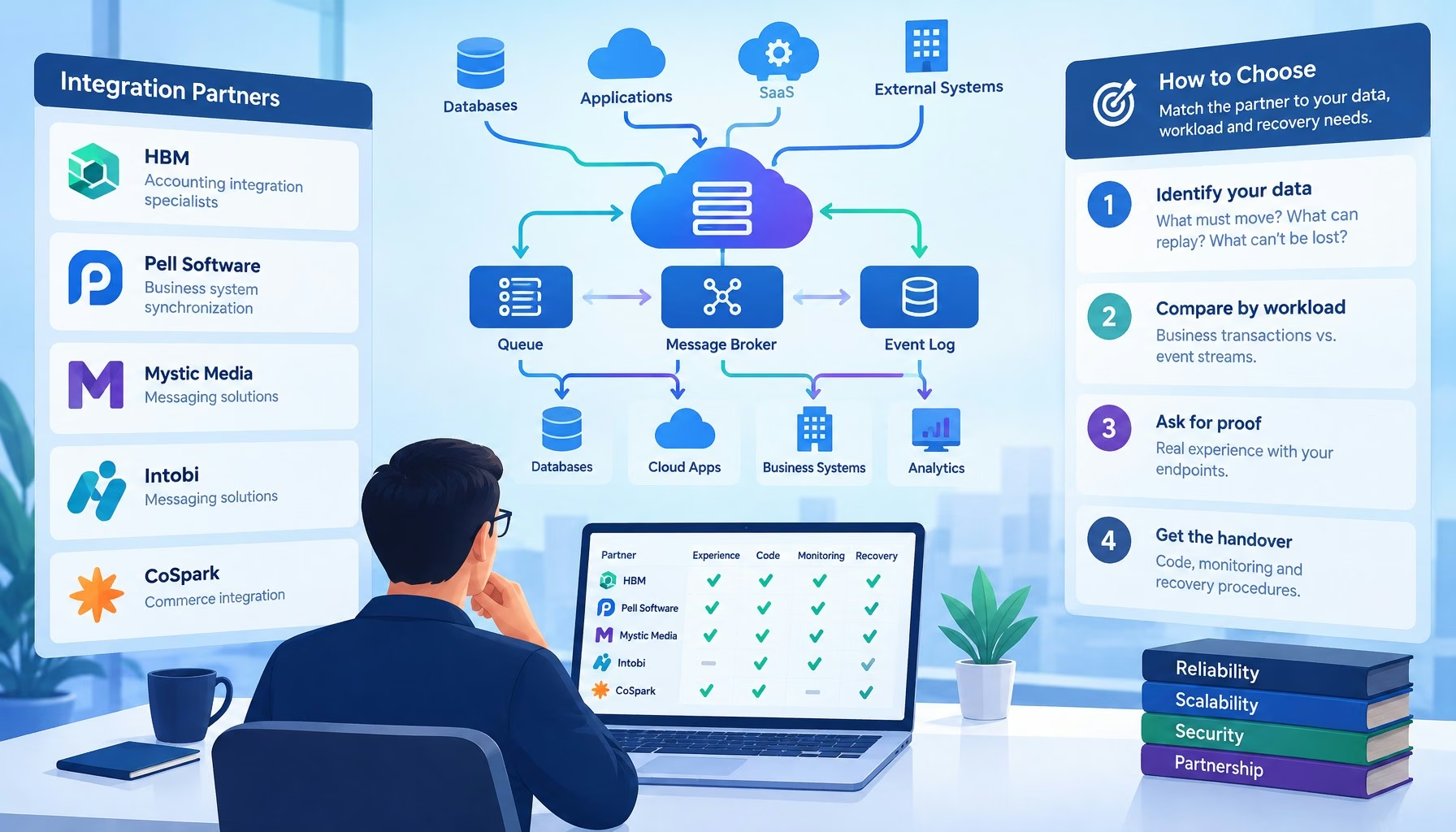
Technical architecture diagram and decision framework for choosing an integration partner for data pipelines: service bus, brokers, and azure-native middleware compared
Choosing an Integration Partner for Data Pipelines: Service Bus, Brokers, and Azure-Native Middleware Compared
Development Exclusive

Stay Connected

1.2KFollowersLike
33.7KFollowersFollow
222FollowersPin

You Might also Like

Data Privacy in the Digital Age: A Right or a Luxury?
Privacy

Data Privacy in the Digital Age: A Right or a Luxury?

8 Min Read
Importance of Both AI or VPN Technology in the Future of Privacy
Artificial Intelligence

Importance of Both AI or VPN Technology in the Future of Privacy

7 Min Read
The Pivoting Role of Internet Safety Rules in the Era of Big Data
Security

The Pivoting Role of Internet Safety Rules in the Era of Big Data

6 Min Read
How the History of Data Gathering Lead to the Age of Big Data
Big DataData QualityExclusive

How the History of Data Gathering Lead to the Age of Big Data

5 Min Read

SmartData Collective is one of the largest & trusted community covering technical content about Big Data, BI, Cloud, Analytics, Artificial Intelligence, IoT & more.

5 Great Tips for Using Data Analytics for Website UX
Big Data
From Bolts to Bots: How AI Is Fortifying the Automotive Industry
Artificial Intelligence

Quick Link

  • About
  • Contact
  • Privacy
Follow US
© 2008-26 SmartData Collective. All Rights Reserved.
Welcome Back!

Sign in to your account

Username or Email Address
Password

Lost your password?