We use cookies, including third-party cookies from Google to serve personalized ads through AdSense, to operate this site and understand how it is used. By continuing to browse, you accept this use. See our Privacy Policy and Terms of Use for details, including how to opt out of personalized advertising.
Accept
SmartData CollectiveSmartData Collective
  • Analytics
    AnalyticsShow More: Analytics
    Cut-paper editorial diagram of public web pages flowing through a terracotta volume meter into a BI budget panel.
    The Line Item Behind Public Web Data in BI: Proxy Bandwidth
    12 Min Read
    Flat editorial illustration: The article is about joining public web signals with internal business metrics so BI teams can inter
    Alternative Data in BI: Bringing Public Web Data Into Your Dashboards
    23 Min Read
    Flat editorial illustration: The article is about automating the collection, preparation, and delivery of marketing data across p
    From Data to Dashboards: 5 Marketing Reporting Automation Software Picks
    12 Min Read
    Flat editorial illustration: The article contrasts passive follower totals with a behavioral path from attention and trust to cli
    Creator Analytics Beyond Follower Count: Seven Metrics That Measure Audience Behavior
    11 Min Read
    Flat editorial illustration: The article connects AI and marketing analytics with managerial judgment grounded in consumer behavi
    How an Online MBA in Marketing Connects AI and Data Analytics
    11 Min Read
  • Big Data
  • BI
  • Exclusive
  • IT
  • Marketing
  • Software
Search
© 2008-25 SmartData Collective. All Rights Reserved.
Reading: Understanding Virtual Technology and the Benefits of Virtual Networks
Share
Notification
Font ResizerAa
SmartData CollectiveSmartData Collective
Font ResizerAa
Search
  • About
  • Help
  • Privacy
Follow US
© 2008-23 SmartData Collective. All Rights Reserved.
SmartData Collective > IT > Understanding Virtual Technology and the Benefits of Virtual Networks
IT

Understanding Virtual Technology and the Benefits of Virtual Networks

Anand
Anand
6 Min Read
Understanding Virtual Technology and the Benefits of Virtual Networks
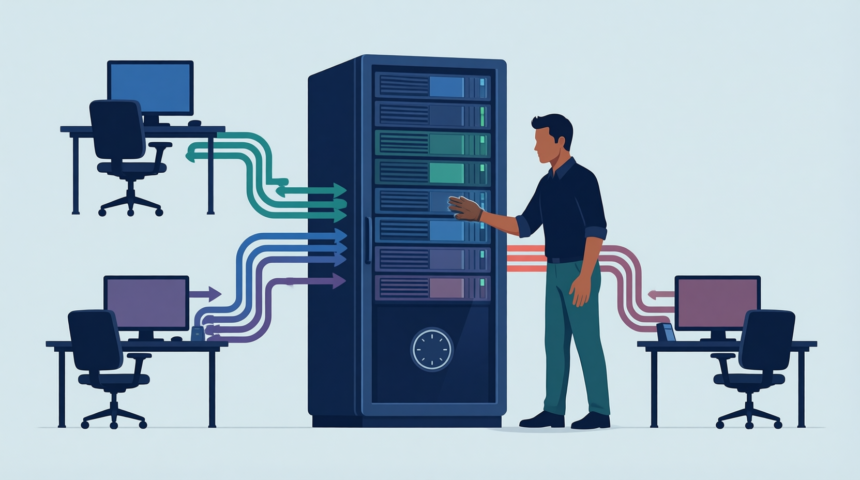
Illustration generated with Qwen Image.
SHARE

If you want a network virtualization platform with security features that will transform your current network operations, dramatically slash costs, boost revenues, and increase efficiency across the board and by many orders of magnitude, then you may just want to consider using a VMWare NSX.

Five Virtues of Virtualization
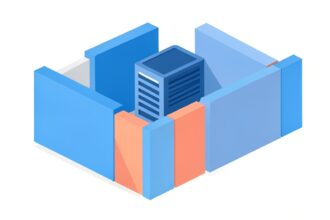
If you want a network virtualization platform with security features that will transform your current network operations, dramatically slash costs, boost revenues, and increase efficiency across the board and by many orders of magnitude, then you may just want to consider using a VMWare NSX.

Five Virtues of Virtualization

More Read

SAP's New Fraud Management Analytical Application
SAP’s New Fraud Management Analytical Application
Reasons For Transitioning To Cloud Computing In 2020
Today’s Biggest Cyber Security Threat is Inside Your Business
Dynamic Cybersecurity Needs: Reassessing Security
Only 18% of Software Apps Pass Security Tests

Here are five good reasons to ponder the idea of using a virtual network rather than a physical one:

First, a virtual network is agile. It cuts the time needed to provision multi-tier network topologies. Customization is also a breeze. In fact, even enterprise-sized security services can be provisioned in seconds, not weeks.

Second, a virtual network is cost effective, reducing capital or operational expenditure. Configuring things manually becomes unnecessary. Automation does that for you. Provisioning networks also becomes easier; as does meeting the hardware needs of your network.

Third, a virtual network improves options since it works on hypervisors, network hardware, and cloud-based platforms.

Fourth, a virtual network works just as efficiently as virtual machine. Just as it is easy to compute with a virtual machine, it is easy to set up and run a virtualized network. This network not only fully-functional, but it can also be provisioned regardless of your hardware or your topology.

Fifth, a virtual network effectively delivers distributed security. It’s time to rethink network security. Virtual ports distribute and enforce security profiles.

Who Uses Virtual Networks?

Virtual networks are not a theoretical idea, but a proven concept. Some of the largest service providers deploy virtual networks, including data centers and multinational financial organizations. The reason they prefer virtual networks to physical ones because all constraints associated with physical networks have been swept aside. VMware NSX clients include the following well-known large scale businesses:

  • AT&T
  • NTT
  • Rackspace
  • eBay
  • PayPal

Improved Speed and Efficiency

The faster and more efficiently a business can go, the lower its costs and the higher its profits. Businesses want faster innovation and time-to-market schedules. With virtual networks like VMware NSX, these and more business requirements are met. In fact, business operations improve by many orders of magnitude. Networks become faster and more economical, and more choices are available. All these benefits are a result of the software making it easy to program complex networks. Provisioning networks becomes simpler because they can be created, destroyed, and recreated in a virtual environment. It is also possible to get VMware NSX security for enterprise level cloud solutions.

The whole idea behind virtual networking is not merely an improvement on the existing paradigm, it is a revolutionary transformation. It’s not a transition from the old to the new, but a reinvention of the new. In fact, it can be called a completely new model for how networks operate.

Understanding Virtual Technology

Sometimes comparisons are the best way to describe something. Comparing virtual networks with virtual machines makes it easier to understand the way virtual technology works.

A virtual machine is not a physical machine but software that offers an application a logical central processing unit and logical memory and storage capacity. In a similar way, a virtual network offers logical components like switches, firewalls, and routers. That’s not all, of course. For instance, workloads can also be connected with logical components like load balancers and VPNs.

In essence, then, virtual servers allow IT to calculate capacity in the same way they would compute capacity with a physical server. Similarly virtual networks allow IT to figure data transference capacity in the same way they would gauge the process with a physical network.

Finally, both kinds of virtual solutions can be repurposed if desired since there is none of the costs or labor needs associated with physical objects.

Security Provisioning

NSX VMware is as robust as a physical network. Its features include:

  • Automating security provisioning
  • Application sharing
  • Distributed states
  • Firewalling
  • Segmentation
  • Multiple tenancy
  • Virtual network isolation

Conclusion

A virtual network transforms the network operating model. Businesses that use it benefit from better, faster, and more efficient operations. In addition, service quality across a wide spectrum of IT functions improves dramatically.


Share This Article
Facebook Pinterest LinkedIn
Share
ByAnand
Follow:
Anand Srinivasan is the founder of Hubbion, a suite of business apps. The Hubbion Project Management app was ranked among the top 20 in its category for 2017 by Capterra.

Follow us on Facebook

Latest News

Cut-paper editorial diagram of service callback tickets moving through a terracotta sorter into rising scorecard bars.
Why Your Redo Jobs Hold the Best Data in Your Franchise
Big Data Data Collection Exclusive
Cut-paper editorial diagram of public web pages flowing through a terracotta volume meter into a BI budget panel.
The Line Item Behind Public Web Data in BI: Proxy Bandwidth
Big Data Business Intelligence Exclusive Web Analytics
Cut-paper editorial diagram of raw business invoices moving through a terracotta data pipeline into structured analytics.
Where Intelligent Automation & Data Pipelines Pay Off First
Artificial Intelligence Big Data
Layered cream, terracotta, and charcoal paper contract sheets flowing through a security shield into a verified server rack
What Should a Managed IT Service Agreement Include?
IT

Stay Connected

1.2KFollowersLike
33.7KFollowersFollow
222FollowersPin

You Might also Like

Big Data: A Natural Solution for Disaster Relief
AnalyticsBig DataData ManagementITNewsPredictive Analytics

Big Data: A Natural Solution for Disaster Relief

5 Min Read
8 Features of a True Enterprise-Grade Platform for Hadoop and NoSQL
AnalyticsBig DataBusiness IntelligenceCloud ComputingData QualityData VisualizationData WarehousingHadoopITMapReduceOpen SourceSocial DataSoftwareSQLUnstructured DataWorkforce Data

8 Features of a True Enterprise-Grade Platform for Hadoop and NoSQL

5 Min Read
The Unbearable Lightness of Multitenancy in the Cloud
Cloud Computing

The Unbearable Lightness of Multitenancy in the Cloud

9 Min Read
The BI Collaboration Challenge [VIDEO]
AnalyticsBig DataBusiness IntelligenceCollaborative DataData VisualizationDecision ManagementKnowledge ManagementMobility

The BI Collaboration Challenge [VIDEO]

1 Min Read

SmartData Collective is one of the largest & trusted community covering technical content about Big Data, BI, Cloud, Analytics, Artificial Intelligence, IoT & more.

Artificial Intelligence for eCommerce: A Closer Look
Artificial Intelligence
The Art of Conversation: Enhancing Chatbots with Advanced AI Prompts
Chatbots

Quick Link

  • About
  • Contact
  • Privacy
Follow US
© 2008-26 SmartData Collective. All Rights Reserved.
Welcome Back!

Sign in to your account

Username or Email Address
Password

Lost your password?