Cookies help us display personalized product recommendations and ensure you have great shopping experience.

By using this site, you agree to the Privacy Policy and Terms of Use.
Accept
SmartData CollectiveSmartData Collective
  • Analytics
    AnalyticsShow More
    media monitoring
    Signals In The Noise: Using Media Monitoring To Manage Negative Publicity
    5 Min Read
    data analytics
    How Data Analytics Can Help You Construct A Financial Weather Map
    4 Min Read
    financial analytics
    Financial Analytics Shows The Hidden Cost Of Not Switching Systems
    4 Min Read
    warehouse accidents
    Data Analytics and the Future of Warehouse Safety
    10 Min Read
    stock investing and data analytics
    How Data Analytics Supports Smarter Stock Trading Strategies
    4 Min Read
  • Big Data
  • BI
  • Exclusive
  • IT
  • Marketing
  • Software
Search
© 2008-25 SmartData Collective. All Rights Reserved.
Reading: Bluetooth 5 – the Biggest Breakthrough in the IoT in 20 Years
Share
Notification
Font ResizerAa
SmartData CollectiveSmartData Collective
Font ResizerAa
Search
  • About
  • Help
  • Privacy
Follow US
© 2008-23 SmartData Collective. All Rights Reserved.
SmartData Collective > Exclusive > Bluetooth 5 – the Biggest Breakthrough in the IoT in 20 Years
ExclusiveInternet of Things

Bluetooth 5 – the Biggest Breakthrough in the IoT in 20 Years

Ryan Kade
Ryan Kade
5 Min Read
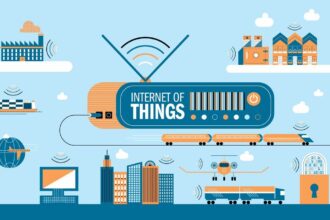
bluetooth 5 with IoT
Shutterstock Image - By PowerUp | https://www.shutterstock.com/g/deliverance
SHARE

The Bluetooth 5 hit the market just over a year ago. Mark Powell, Executive Director of Bluetooth SIG, proudly announced that the new device would revolutionize the IoT.

Contents
  • Bluetooth 5’s Mesh Networking Features Open New Doors for IoT Adoption
  • The Bluetooth 5 Was a Major Breakthrough for the IoT

“Bluetooth is revolutionizing how people experience the IoT. Bluetooth 5 continues to drive this revolution by delivering reliable IoT connections and mobilizing the adoption of beacons, which in turn will decrease connection barriers and enable a seamless IoT experience,” Powell said in last year’s press release.

The capabilities of the Bluetooth 5 were nothing short of remarkable. The new devices were twice as fast, had four times the range and over nine times the broadband messaging capacity as their predecessor, the Bluetooth 4.

These new devices are leading to new IoT applications that we didn’t envision a year ago. Keyinsight predicted that the new IoT devices would be used in every industry from agriculture to transportation. These predictions will finally come to fruition due to advances in Bluetooth technology.

Why is Bluetooth 5 so special and how will it change the IoT? Here is a quick primer.

More Read

ai and mental health
AI Drives Breakthroughs in Therapy Practice Management Software
Two Ways AI-Driven Smart Technologies Are Helping the Libraries
Big Data Creates 4 Massive Benefits Of Automated Log Management
7 Lessons That Will Teach You All You Need To Know About Machine Learning
Auditing the State of Your Company’s Analytics Infrastructure in 6 Questions

Bluetooth 5’s Mesh Networking Features Open New Doors for IoT Adoption

When Bluetooth first hit the market, it was one of the first IoT devices available. People could use their Bluetooth to connect to automobile CD players, radios and other devices. It was an unprecedented level of connectivity between previously segregated devices. It was only the first major breakthrough with the IoT, but it wouldn’t be the last. Nearly 20 years later, Bluetooth is still a pioneer in the IoT.

Mesh networking is a multi-node networking scheme that transfers data to the client as efficiently as possible. It was adopted by the military a long time ago and its origins can be traced back at least 30 years. However, the mobile broadband communication industry didn’t make any strides with mesh networking until Bluetooth implemented it this past July.

Mobile broadband communications companies can’t offer the same centralized mesh network as many other systems. The biggest limitation is the privacy settings of each device. The devices can’t all connect with each other on the network. Bluetooth 5 has allowed them to do the next best thing – connect to the network central hub instead.

Companies have been exploring ways to make mesh networking possible on Bluetooth devices for several years. In 2015, Cambridge Silicon Radio (CSR) participated in a merger with Qualcomm to develop a solution to allow low energy Bluetooth devices to form their own mesh network. The solution wasn’t very robust, but it was an incremental improvement over previous options.

Bluetooth finally developed its own mesh network standard for all of its new devices. The robustness, signal range and speed of the Bluetooth 5 made this possible.

Bluetooth 5 devices can send very short signals to and from the central network hub. This makes it easier to track devices and monitor activity.

How can this play a role in the future of the IoT? There are a number of possibilities. One of the best applications is with in-store mobile marketing. Retailers can set up tiny beacons that are programmed to connect to Bluetooth 5 devices. When a shopper is within range, they send quick push notifications to alert them about new deals or other opportunities. These messages are sent with short urls that direct the user to the site where they can take action.

The Bluetooth 5 Was a Major Breakthrough for the IoT

Bluetooth has been driving the evolution of the IoT since 1998. However, the newest device is possibly the company’s biggest breakthrough in the past 20 years. The new mesh networking capabilities are changing the future of the IoT in ways we never imagined.


TAGGED:Bluetooth 5internet of thingsIoTtechnology
Share This Article
Facebook Pinterest LinkedIn
Share
ByRyan Kade
Follow:
Ryan Kade is the editor overseeing contributed content at Smartdata Collective and contributes weekly column.

Follow us on Facebook

Latest News

data security issues with annotation outsourcing
Data Annotation Outsourcing and Risk Mitigation Strategies
Big Data Exclusive Security
NO-CODE
Breaking down SPARC Emulation Technology: Zero Code Re-write
Exclusive News Software
online business using analytics
Why Some Businesses Seem to Win Online Without Ever Feeling Like They Are Trying
Exclusive News
edi compliance with AI
AI Is Transforming EDI Compliance Services
Exclusive News

Stay Connected

1.2KFollowersLike
33.7KFollowersFollow
222FollowersPin

You Might also Like

outsourcing your IoT research
ExclusiveInternet of Things

The Benefits of Outsourcing Your IoT Research and Development

6 Min Read

How IoT Applications Can Help Businesses Grow Internally

6 Min Read
IoT for security
Internet of Things

How IEC 62443 and Other Regulatory Requirements Help Enable IoT Security

9 Min Read

Tracking All The Things You Need To Analyze

7 Min Read

SmartData Collective is one of the largest & trusted community covering technical content about Big Data, BI, Cloud, Analytics, Artificial Intelligence, IoT & more.

AI chatbots
AI Chatbots Can Help Retailers Convert Live Broadcast Viewers into Sales!
Chatbots
data-driven web design
5 Great Tips for Using Data Analytics for Website UX
Big Data

Quick Link

  • About
  • Contact
  • Privacy
Follow US
© 2008-25 SmartData Collective. All Rights Reserved.
Welcome Back!

Sign in to your account

Username or Email Address
Password

Lost your password?