
Cookies help us display personalized product recommendations and ensure you have great shopping experience.

By using this site, you agree to the Privacy Policy and Terms of Use.
Accept
SmartData CollectiveSmartData Collective
  • Analytics
    AnalyticsShow More
    media monitoring
    Signals In The Noise: Using Media Monitoring To Manage Negative Publicity
    5 Min Read
    data analytics
    How Data Analytics Can Help You Construct A Financial Weather Map
    4 Min Read
    financial analytics
    Financial Analytics Shows The Hidden Cost Of Not Switching Systems
    4 Min Read
    warehouse accidents
    Data Analytics and the Future of Warehouse Safety
    10 Min Read
    stock investing and data analytics
    How Data Analytics Supports Smarter Stock Trading Strategies
    4 Min Read
  • Big Data
  • BI
  • Exclusive
  • IT
  • Marketing
  • Software
Search
© 2008-25 SmartData Collective. All Rights Reserved.
Reading: HCIR: Better Than Magic!
Share
Notification
Font ResizerAa
SmartData CollectiveSmartData Collective
Font ResizerAa
Search
  • About
  • Help
  • Privacy
Follow US
© 2008-23 SmartData Collective. All Rights Reserved.
SmartData Collective > Big Data > Data Mining > HCIR: Better Than Magic!
Data Mining

HCIR: Better Than Magic!

Daniel Tunkelang
Daniel Tunkelang
6 Min Read
SHARE

I’m a big fan of using machine learning and automated information extraction to improve search performance and generally support information seeking. I’ve had some very good experiences with both supervised (e.g., classification) and unsupervised (e.g., terminology extraction) learning approaches, and I think that anyone today who is developing an application to help people access text documents should at least give serious consideration to both kinds of algorithmic approaches. Sometimes automatic techniques work like magic!

But sometimes they don’t. Netbase’s recent experience with HealthBase is, unfortunately, a case study in why you shouldn’t have too much faith in magic. As Jeff Dalton noted, the “semantic search” is hit-or-miss. The hits are great, but it’s the misses that generate headlines like this one in TechCrunch: “Netbase Thinks You Can Get Rid Of Jews With Alcohol And Salt”. Ouch.

It seems unfair to single out Netbase for a problem endemic to fully automated approaches, but they did invite the publicity. It would be easy to dig up a host of other purely automated approaches that are just as embarassing, if less publicized.

Dave Kellogg put it well (if a bit …

More Read

For data-mining cops, tattoos are tags
Finally factor of speech clearence (C50) and still more to go.
Overcoming Tradition with Analytics – Baseball’s Mindshift
Monitoring your brand: Sentiment analysis
Fashion + Analytics + Social = The Perfect Ensemble

I’m a big fan of using machine learning and automated information extraction to improve search performance and generally support information seeking. I’ve had some very good experiences with both supervised (e.g., classification) and unsupervised (e.g., terminology extraction) learning approaches, and I think that anyone today who is developing an application to help people access text documents should at least give serious consideration to both kinds of algorithmic approaches. Sometimes automatic techniques work like magic!

But sometimes they don’t. Netbase’s recent experience with HealthBase is, unfortunately, a case study in why you shouldn’t have too much faith in magic. As Jeff Dalton noted, the “semantic search” is hit-or-miss. The hits are great, but it’s the misses that generate headlines like this one in TechCrunch: “Netbase Thinks You Can Get Rid Of Jews With Alcohol And Salt”. Ouch.

It seems unfair to single out Netbase for a problem endemic to fully automated approaches, but they did invite the publicity. It would be easy to dig up a host of other purely automated approaches that are just as embarassing, if less publicized.

Dave Kellogg put it well (if a bit melodramatically) when he characterized this experience as a “tragicomedy” that reveals the perils of magic. His argument, in a nutshell, is that you don’t want to be completely dependent on an approach for which 80% accuracy is considered good enough. As he says, the problem with magic is that it can fail in truly spectacular ways.
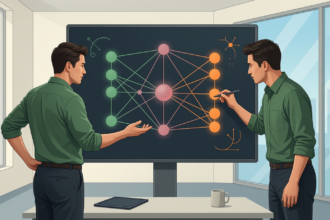
Granted, there’s a lot more nuance to using automated content enrichment approaches. Some techniques (or implementations of general techniques) optimize for precision (i.e., minimizing false positives), while others optimize for recall (i.e., minimizing false negatives). Supervised techniques are generally more conservative than unsupervised ones: you might incorrectly assert that a document is about disease, but that’s less dramatic a failure than adding the word “Jews” to an automatically extracted medical vocabulary. In general, the more human input into the process, the more opportunity to improve the effectiveness and avoid embarassing mistakes.

Of course, the whole point of automation is to reduce the need for human input. Human labor is a lot more expensive that machine labor! But there’s a big difference between the mirage of eliminating human labor and the realistic aspiration to make its use more efficient and effective. That what human-computer information retrieval (HCIR) is all about, and all of the evidence I’ve encountered confirms that it’s the right way to crack this nut. Look for yourselves at the proceedings of HCIR ‘07 and ‘08. Having just read through all of the submissions to HCIR ‘09, I can tell you that the state of the art keeps getting better.

Interestingly, even Google CEO Eric Schmidt may be getting around to drinking the kool-aid. In an interview published today in TechCrunch, he says: “We have to get from the sort of casual use of asking, querying… to ‘what did you mean?’.” Unfortunately, he then goes into science-fiction-AI land and seems to end up suggesting a natural language question-answering approach like Wolfram Alpha. Still, at least his heart is in the right place.

Anyway, as they say, experience is the best teacher. Hopefully Netbase can recover from what could generously be called a public relations hiccup. But, as the aphorism continues, it is only the fool that can learn from no other. Let’s not be fools–and instead take away the moral of this story: instead of trying to automate everything, optimize the division of labor between human and machine. HCIR.


Link to original post

TAGGED:hcirmachine learning
Share This Article
Facebook Pinterest LinkedIn
Share

Follow us on Facebook

Latest News

edi compliance with AI
AI Is Transforming EDI Compliance Services
Exclusive News
companies using big data
5 Industries Driving Big Data Technology Growth
Big Data Exclusive
software developer using ai
California AI Companies That Are Set for Long-Term Growth
Development Exclusive
data science professor
The Power of Warm-Ups: Setting the Stage for Learning
Exclusive News

Stay Connected

1.2KFollowersLike
33.7KFollowersFollow
222FollowersPin

You Might also Like

ways to use machine learning to get more value out of data analytics
Machine Learning

How To Enhance Your Analytics with Insightful ML Approaches

9 Min Read
facts about artificial intelligence
Artificial Intelligence

7 Mind-Blowing Facts You Didn’t Know About AI

8 Min Read
big data
AnalyticsBig DataMachine Learning

The Future of Big Data: 10 Predictions You Should Be Aware Of

8 Min Read
machine learning and web hosting
Machine Learning

The Fascinating Benefits of Machine Learning for Web Hosting Monetization

6 Min Read

SmartData Collective is one of the largest & trusted community covering technical content about Big Data, BI, Cloud, Analytics, Artificial Intelligence, IoT & more.

ai in ecommerce
Artificial Intelligence for eCommerce: A Closer Look
Artificial Intelligence
AI and chatbots
Chatbots and SEO: How Can Chatbots Improve Your SEO Ranking?
Artificial Intelligence Chatbots Exclusive

Quick Link

  • About
  • Contact
  • Privacy
Follow US
© 2008-25 SmartData Collective. All Rights Reserved.
Welcome Back!

Sign in to your account

Username or Email Address
Password

Lost your password?