Cookies help us display personalized product recommendations and ensure you have great shopping experience.

By using this site, you agree to the Privacy Policy and Terms of Use.
Accept
SmartData CollectiveSmartData Collective
  • Analytics
    AnalyticsShow More
    media monitoring
    Signals In The Noise: Using Media Monitoring To Manage Negative Publicity
    5 Min Read
    data analytics
    How Data Analytics Can Help You Construct A Financial Weather Map
    4 Min Read
    financial analytics
    Financial Analytics Shows The Hidden Cost Of Not Switching Systems
    4 Min Read
    warehouse accidents
    Data Analytics and the Future of Warehouse Safety
    10 Min Read
    stock investing and data analytics
    How Data Analytics Supports Smarter Stock Trading Strategies
    4 Min Read
  • Big Data
  • BI
  • Exclusive
  • IT
  • Marketing
  • Software
Search
© 2008-25 SmartData Collective. All Rights Reserved.
Reading: Gapminder: Animating the World’s Data
Share
Notification
Font ResizerAa
SmartData CollectiveSmartData Collective
Font ResizerAa
Search
  • About
  • Help
  • Privacy
Follow US
© 2008-23 SmartData Collective. All Rights Reserved.
SmartData Collective > Big Data > Data Mining > Gapminder: Animating the World’s Data
Data MiningData VisualizationPredictive Analytics

Gapminder: Animating the World’s Data

DavidMSmith
DavidMSmith
3 Min Read
SHARE

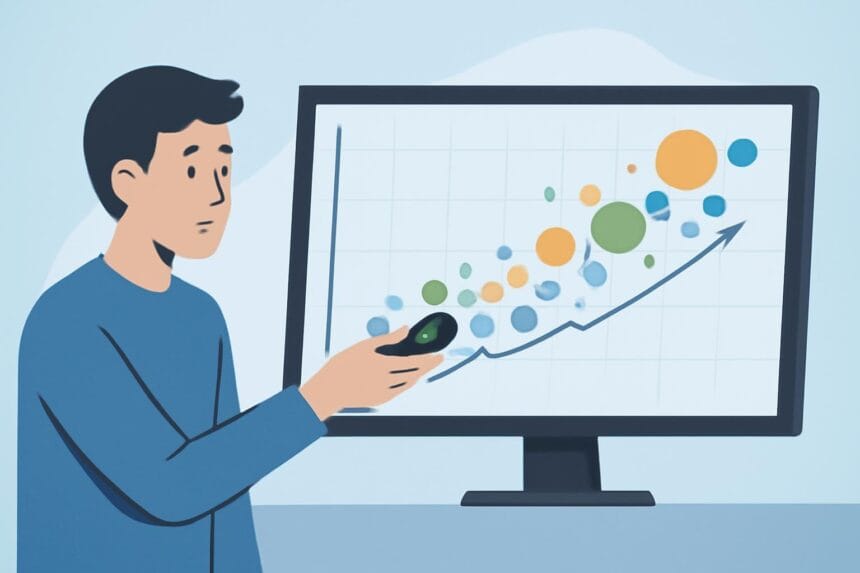
Gapminder is non-profit organization that makes social, environmental and economic development data from all the countries of the world available and accessible to all, for free. They have also created the Gapminder World tool, which lets you plot these data variables in a scatterplot: for example, life expectancy versus per-capita income, with a point size of population. Then (and this is the cool bit), you can animate that scatterplot over time, and see how the relationship changes between (say) 1901 and 2001.

You can see this animation in action in the video 200 Years That Changed the World. Hans Rosling narrates as you see the countries of the world improve their life expectancy and income together from 1809 onwards. Called out for particular attention are relative behavior of China and the USA. 

Rosling gave an entertaining speech at the 2006 TED conference to introduce Gapminer. His presentation there is a perfect illustration about how presenting data in an informative way, and coupling it with a compelling story, can make even “dry” data interesting. It’s not just the animation showing the progression over time that makes it compelling: his calling out individual countries, …

More Read

Bad 3D Pie Chart Alert! By Scientific American no less!
With PMML, interoperability is truly attainable
MacGyver: Data Governance and Duct Tape
Smart Data Collective
Google’s Chief Economist Hal Varian Talks Stats 101

Gapminder is non-profit organization that makes social, environmental and economic development data from all the countries of the world available and accessible to all, for free. They have also created the Gapminder World tool, which lets you plot these data variables in a scatterplot: for example, life expectancy versus per-capita income, with a point size of population. Then (and this is the cool bit), you can animate that scatterplot over time, and see how the relationship changes between (say) 1901 and 2001.

You can see this animation in action in the video 200 Years That Changed the World. Hans Rosling narrates as you see the countries of the world improve their life expectancy and income together from 1809 onwards. Called out for particular attention are relative behavior of China and the USA. 

Rosling gave an entertaining speech at the 2006 TED conference to introduce Gapminer. His presentation there is a perfect illustration about how presenting data in an informative way, and coupling it with a compelling story, can make even “dry” data interesting. It’s not just the animation showing the progression over time that makes it compelling: his calling out individual countries, and especially drilling down beyond averages for regions and countries to show the variation within them, really makes this an effective presentation of the data. He remarks at the end that “statisticians don’t like this”, but I have no idea why: to me, this is an outstanding exploratory and (as he suggests) hypothesis-generating tool.

It would be great to create similar animated charts in R — anyone know a way to do that?

TAGGED:data visualizationgoogler
Share This Article
Facebook Pinterest LinkedIn
Share

Follow us on Facebook

Latest News

edi compliance with AI
AI Is Transforming EDI Compliance Services
Exclusive News
companies using big data
5 Industries Driving Big Data Technology Growth
Big Data Exclusive
software developer using ai
California AI Companies That Are Set for Long-Term Growth
Development Exclusive
data science professor
The Power of Warm-Ups: Setting the Stage for Learning
Exclusive News

Stay Connected

1.2KFollowersLike
33.7KFollowersFollow
222FollowersPin

You Might also Like

How Google’s new “answer” machine could rock Web business

2 Min Read

What are Advanced Segments in Google Analytics and Why Should You Use Them?

0 Min Read

Hadoop pushes, pulls Big Data analytics into mainstream (Part Two)

8 Min Read

What does Google know about you?

5 Min Read

SmartData Collective is one of the largest & trusted community covering technical content about Big Data, BI, Cloud, Analytics, Artificial Intelligence, IoT & more.

AI chatbots
AI Chatbots Can Help Retailers Convert Live Broadcast Viewers into Sales!
Chatbots
giveaway chatbots
How To Get An Award Winning Giveaway Bot
Big Data Chatbots Exclusive

Quick Link

  • About
  • Contact
  • Privacy
Follow US
© 2008-25 SmartData Collective. All Rights Reserved.
Welcome Back!

Sign in to your account

Username or Email Address
Password

Lost your password?