We use cookies, including third-party cookies from Google to serve personalized ads through AdSense, to operate this site and understand how it is used. By continuing to browse, you accept this use. See our Privacy Policy and Terms of Use for details, including how to opt out of personalized advertising.
Accept
SmartData CollectiveSmartData Collective
  • Analytics
    AnalyticsShow More
    chatgpt image jul 21, 2026, 04 34 30 pm
    4 Core Benefits of Predictive Maintenance after Vibration Analysis
    10 Min Read
    How Does Data Mining Boost Customer Satisfaction in Logistics? Harnessing Analytics for Results -- AI-generated illustration
    How Does Data Mining Boost Customer Satisfaction in Logistics? Harnessing Analytics for Results
    11 Min Read
    chatgpt image jul 13, 2026, 04 23 45 pm
    How Data Analytics Helps Companies Improve User Engagement
    19 Min Read
    chatgpt image jul 13, 2026, 03 59 46 pm
    How Data Analytics Improves Multi-Location Search Strategies
    10 Min Read
    cybersecurity efforts
    How Behavioral Analytics and AI Are Redefining Cybersecurity for Boca Raton Businesses
    14 Min Read
  • Big Data
  • BI
  • Exclusive
  • IT
  • Marketing
  • Software
Search
© 2008-25 SmartData Collective. All Rights Reserved.
Reading: Here’s how to build on Business Analytics
Share
Notification
Font ResizerAa
SmartData CollectiveSmartData Collective
Font ResizerAa
Search
  • About
  • Help
  • Privacy
Follow US
© 2008-23 SmartData Collective. All Rights Reserved.
SmartData Collective > Business Intelligence > CRM > Here’s how to build on Business Analytics
Business IntelligenceCRMData MiningPredictive Analytics

Here’s how to build on Business Analytics

JamesTaylor
JamesTaylor
7 Min Read
Here’s how to build on Business Analytics
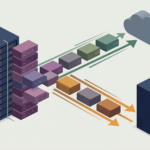
Illustration generated with FLUX.2 [klein 4B] via Cloudflare Workers AI.
SHARE

As I blogged earlier, at the SAS Global Forum this week some SAS speakers drew a distinction between Business Intelligence – BI – and Business Analytics. I worry that this is a distinction without a difference and that it fell short of what SAS can offer its customers. Neil Raden, on his blog, dismissed the difference as “all fluff” and suggested we use an old but very meaningful phrase “decision support”. Like Neil, I noticed that the word “decision” was conspicuously absent from the SAS framework. Neil wondered how “this framework leads to making better [decisions]” and this made me think – what could a company do to build on the SAS Business Analytics framework?

The first step would be to look at the analytics you are developing and ask the question “what decision is this assisting?” Understanding the decision-making of analytic users, those who see the reports or dashboards, would clarify what analytics you need to make further progress and make it obvious who was the true consumer of each analytic. Understanding, for instance, that the reason out of stock predictions are being added to a particular report is that the supply chain manager uses it to place replenishment orders would show that it this report is being used to decide if a particular product should be ordered this week or not. Knowing that this is the decision being supported – how your reports generate action – might show you that other formats, other analytics would also be helpful and would clarify the analytic sophistication of the consumers of the results.

Once you know what decisions are being supported you can ask yourself questions like:

  • are there rules or constraints that also impact these decisions?
  • how do the decision makers apply these rules – are they repeatable?
  • does the decision maker have more productive things to be doing with their time than reviewing these reports and making these decisions – would it be worth offloading the decision to a system?
  • if a system made this decision would it be made quicker (overnight rather than in the morning, for instance) and would that add any value?
  • would the company run more effectively or efficiently if someone else controlled the way this decision was made?
  • can I break up this decision into lots of micro-decisions and get more targeted, more personalized, more focused?

The answers to these kinds of questions help clarify where on the range of pure decision support to pure decision automation a given decision might fall.In our book, Smart (Enough) Systems, we use this graphic to explain how these range works.

More Read

Can AI Enhance Phishing Attack Detection?
The Misunderstanding of Master Data Management
The Winning Formula to Being a Kaggle Data Scientist
5 Industries That Are Impacted By Data Collection In A Major Way
First Look – SAS Customer Intelligence

Strategic low-volume, high individual value decisions tend to require decision support where an expert or knowledge worker needs interactive analytic tools. Tactical decisions tend to be higher volume and more standardized “business analytics” are called for. Decision automation, however, starts to add value because there are often repeatable steps or rules to follow also. Finally operational decisions, high volume decisions with low individual value, are those where reports and dashboards should be replaced with embedded analytic models coupled with business rules to implement policy and regulations, expertise and know-how. This decision automation may not deliver “the answer” – it may just restrict the allowed answers to a short list – but some or all of the decision making process is automated.

Using business analytics to deliver predictive reporting and predictive dashboards is a great way to build decision support systems but applying Decision Management so that analytics can also be applied when operational decisions call for decision automation will allow SAS customers to make every decision analytically based. Decision management puts predictive analytics to work whether decisions are made by machines or by busy people with too little time to read a report (such as most call center or retail staff, for instance) or by people with no particular skill at interpreting data.

TAGGED:business analyticsdecision management
Share This Article
Facebook Pinterest LinkedIn
Share

Follow us on Facebook

Latest News

Flat editorial illustration: The article presents a bifurcated enterprise decision: European organizations evaluating VMware alte
Cloud Infrastructure and Workload Migration: A Data-Driven Look at VMware Alternatives in Europe
Cloud Computing Exclusive
Synthetic Data vs Real Web Data: Comparison, Limitations, and Collection Methods  -- AI-generated illustration
Synthetic Data vs Real Web Data: Comparison, Limitations, and Collection Methods 
Big Data Exclusive
Illustration of mobile analytics dashboards with ad performance charts connected to backend databases
11 Best Sisense Alternatives for Embedded Analytics
Business Intelligence Exclusive
Analyst points at colorful circular data dashboard on screen - information technology business metrics
How Fragmented Workplace Tech Undermines Reliable Business Metrics and Reporting
Cloud Computing Exclusive Infographic IT

Stay Connected

1.2KFollowersLike
33.7KFollowersFollow
222FollowersPin

You Might also Like

Pulse Surveys Must be Part of Every Company's Data Strategy
Big Data

Pulse Surveys Must be Part of Every Company’s Data Strategy

7 Min Read
Getting the other 90% of analytic adoption to happen
Data MiningExclusivePredictive Analytics

Getting the other 90% of analytic adoption to happen

7 Min Read
Location Intelligence and Mobile BI: Advancing Data Analysis in the Healthcare Industry
AnalyticsBusiness IntelligenceData VisualizationExclusiveKnowledge ManagementLocation

Location Intelligence and Mobile BI: Advancing Data Analysis in the Healthcare Industry

9 Min Read
Attensity Uses Social Media Technology for Smarter Customer Engagement
AnalyticsBig DataBusiness IntelligenceCloud ComputingCRMMarket ResearchSocial DataSocial Media AnalyticsText Analytics

Attensity Uses Social Media Technology for Smarter Customer Engagement

5 Min Read

SmartData Collective is one of the largest & trusted community covering technical content about Big Data, BI, Cloud, Analytics, Artificial Intelligence, IoT & more.

From Bolts to Bots: How AI Is Fortifying the Automotive Industry
Artificial Intelligence
5 Great Tips for Using Data Analytics for Website UX
Big Data

Quick Link

  • About
  • Contact
  • Privacy
Follow US
© 2008-26 SmartData Collective. All Rights Reserved.
Welcome Back!

Sign in to your account

Username or Email Address
Password

Lost your password?