We use cookies, including third-party cookies from Google to serve personalized ads through AdSense, to operate this site and understand how it is used. By continuing to browse, you accept this use. See our Privacy Policy and Terms of Use for details, including how to opt out of personalized advertising.
Accept
SmartData CollectiveSmartData Collective
  • Analytics
    AnalyticsShow More
    chatgpt image jul 21, 2026, 04 34 30 pm
    4 Core Benefits of Predictive Maintenance after Vibration Analysis
    10 Min Read
    How Does Data Mining Boost Customer Satisfaction in Logistics? Harnessing Analytics for Results -- AI-generated illustration
    How Does Data Mining Boost Customer Satisfaction in Logistics? Harnessing Analytics for Results
    11 Min Read
    chatgpt image jul 13, 2026, 04 23 45 pm
    How Data Analytics Helps Companies Improve User Engagement
    19 Min Read
    chatgpt image jul 13, 2026, 03 59 46 pm
    How Data Analytics Improves Multi-Location Search Strategies
    10 Min Read
    cybersecurity efforts
    How Behavioral Analytics and AI Are Redefining Cybersecurity for Boca Raton Businesses
    14 Min Read
  • Big Data
  • BI
  • Exclusive
  • IT
  • Marketing
  • Software
Search
© 2008-25 SmartData Collective. All Rights Reserved.
Reading: The Flaw of the Hub-and-Spoke Architecture
Share
Notification
Font ResizerAa
SmartData CollectiveSmartData Collective
Font ResizerAa
Search
  • About
  • Help
  • Privacy
Follow US
© 2008-23 SmartData Collective. All Rights Reserved.
SmartData Collective > Business Intelligence > The Flaw of the Hub-and-Spoke Architecture
Business Intelligence

The Flaw of the Hub-and-Spoke Architecture

EvanLevy
EvanLevy
5 Min Read
The Flaw of the Hub-and-Spoke Architecture
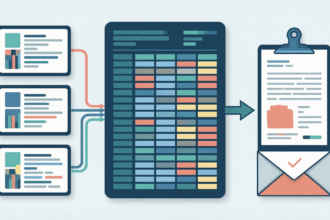
Illustrative image generated with OpenAI gpt-image-1.
SHARE

I recently talked to a client who was fixated on a hub-and-spoke solution to support his company’s analytical applications. This guy had been around the block a few times and had some pretty set paradigms about how BI should work. In the world of software and data, the one thing I’ve learned is that there are no absolutes. And there’s no such thing as a universal architecture.

Wheel_spokes
photo by John-Morgan

The premise of a hub-and-spoke architecture is to have a data warehouse function as the clearing house for all the data a company’s applications might need. This can be a reasonable approach if data requirements are well-defined, predictable, and homogenous across the applications—and if data latency isn’t an issue.

First-generation data warehouses were originally built as reporting systems. But people quickly recognized the need for data provisioning (e.g., moving data between systems), and data warehouses morphed into storehouses for analytic data. This was out of necessity: developers didn’t have the knowledge or skills to retrieve data from operational systems. The data warehouse was rendered a data provisioning platform not because of architectural elegance but due to resource and skills limitations.

More Read

Interview with Lenny Murphy: Market Research and Social Media
What Are the Questions to Ask When Developing a Big Data Strategy?
5 Ways Predictive Analytics Cuts Enterprise Risk
Can Smart Data Ensure Cybersecurity and Data Protection?
The Biggest BI Blunder

(And let’s not forget that the data contained in all these operational systems was rarely documented, whereas data in the warehouse was often supported by robust metadata.)

If everyone’s needs are homogenous and well-defined, using the data warehouse for data provisioning is just fine. The flaw of hub-and-spoke is that it doesn’t address issues of timeliness and latency.  After all, if it could why are programmers still writing custom code for data provisioning?

When an airline wants to adjust the cost of seats, it can’t formulate new pricing based on old data—it needs up-to-the-minute pricing details. Large distribution networks, like retailing and shipping, have learned that hub-and-spoke systems are not the most efficient or cost-effective models.

Nowadays most cutting-edge analytic tools are focused on allowing the business to quickly respond to events and circumstances. And most companies have adopted packaged applications for their core financial and operations. Unlike the proprietary systems of the past, these applications are in fact well-documented, and many come with utilities and standard extracts as part of initial delivery. What’s changed in the last 15 years is that operational applications are now built to share data. And most differentiating business processes require direct source system access.

Many high-value business needs require fine-grained, non-enterprise data. To move this specialized, business function-centric content through a hub-and-spoke network designed to support large-volume, generalized data is not only inefficient but more costly. Analytic users don’t always need the same data. Moreover, these users now know where the data is, so time-sensitive information can be available on-demand.

The logistics and shipping industries learned that you can start with a hub-and-spoke design, but when volume reaches critical mass, direct source-to-destination links are more efficient, and more profitable. (If this wasn’t the case, there would be no such thing as the non-stop flight.) When business requirements are specialized and high-value (e.g., low-latency, limited content), provisioning data directly from the source system is not only justified, it’s probably the most efficient solution.

Share This Article
Facebook Pinterest LinkedIn
Share

Follow us on Facebook

Latest News

Analyst points at colorful circular data dashboard on screen - information technology business metrics
How Fragmented Workplace Tech Undermines Reliable Business Metrics and Reporting
Cloud Computing Exclusive Infographic IT
Using Multi-Source Data and Analytics to Detect Operational Drift Across Franchise Networks -- AI-generated illustration
Using Multi-Source Data and Analytics to Detect Operational Drift Across Franchise Networks
Exclusive Infographic
Beyond The First Impression: The Long-Lasting Impact Of Sensory Marketing -- AI-generated illustration
Beyond The First Impression: The Long-Lasting Impact Of Sensory Marketing
Infographic Marketing
The Infrastructure Gap Slowing Data Center Growth -- AI-generated illustration
The Infrastructure Gap Slowing Data Center Growth
Big Data Cloud Computing Exclusive Infographic IT

Stay Connected

1.2KFollowersLike
33.7KFollowersFollow
222FollowersPin

You Might also Like

How Big Data and AI Are Set to Transform Online Gaming
Artificial IntelligenceBig Data

How Big Data and AI Are Set to Transform Online Gaming

7 Min Read
AI Advances Are Reshaping Video Streaming Protocols
Artificial Intelligence

AI Advances Are Reshaping Video Streaming Protocols

9 Min Read
Online Invoicing Solutions: Boring Billing Just Got Better
Decision ManagementExclusive

Online Invoicing Solutions: Boring Billing Just Got Better

9 Min Read
predictive analytics can help bitcoin traders predict future price movements
Blockchain

AI Technology Helps Facilitate Bitcoin Trading in Djibouti

9 Min Read

SmartData Collective is one of the largest & trusted community covering technical content about Big Data, BI, Cloud, Analytics, Artificial Intelligence, IoT & more.

From Bolts to Bots: How AI Is Fortifying the Automotive Industry
Artificial Intelligence
Artificial Intelligence for eCommerce: A Closer Look
Artificial Intelligence

Quick Link

  • About
  • Contact
  • Privacy
Follow US
© 2008-26 SmartData Collective. All Rights Reserved.
Welcome Back!

Sign in to your account

Username or Email Address
Password

Lost your password?