Cookies help us display personalized product recommendations and ensure you have great shopping experience.

By using this site, you agree to the Privacy Policy and Terms of Use.
Accept
SmartData CollectiveSmartData Collective
  • Analytics
    AnalyticsShow More
    media monitoring
    Signals In The Noise: Using Media Monitoring To Manage Negative Publicity
    5 Min Read
    data analytics
    How Data Analytics Can Help You Construct A Financial Weather Map
    4 Min Read
    financial analytics
    Financial Analytics Shows The Hidden Cost Of Not Switching Systems
    4 Min Read
    warehouse accidents
    Data Analytics and the Future of Warehouse Safety
    10 Min Read
    stock investing and data analytics
    How Data Analytics Supports Smarter Stock Trading Strategies
    4 Min Read
  • Big Data
  • BI
  • Exclusive
  • IT
  • Marketing
  • Software
Search
© 2008-25 SmartData Collective. All Rights Reserved.
Reading: The Push and Pull of Data Integration
Share
Notification
Font ResizerAa
SmartData CollectiveSmartData Collective
Font ResizerAa
Search
  • About
  • Help
  • Privacy
Follow US
© 2008-23 SmartData Collective. All Rights Reserved.
SmartData Collective > Business Intelligence > The Push and Pull of Data Integration
Business Intelligence

The Push and Pull of Data Integration

EvanLevy
EvanLevy
4 Min Read
SHARE

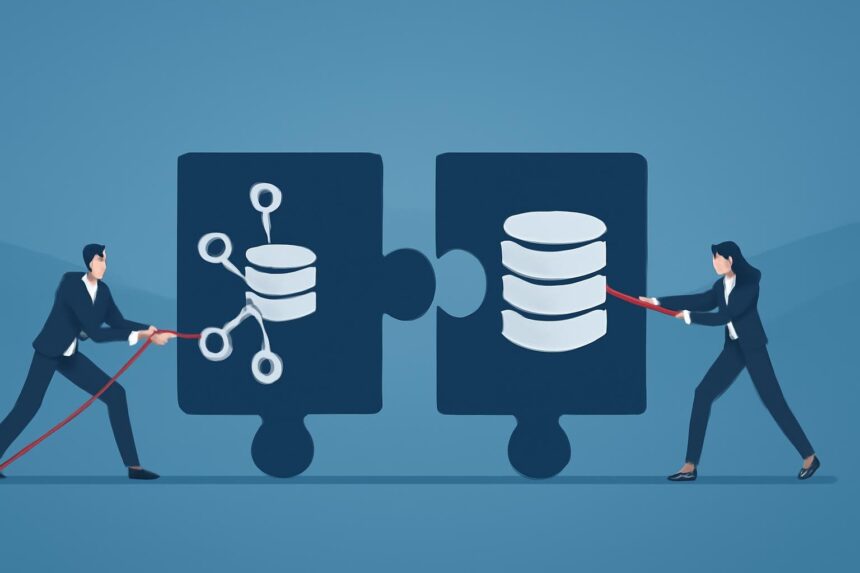
In my last blog post, I described the reality of so-called analytical data integration, which is really just a fancy name for ETL. Now let’s talk about so-called operational data integration. I’m assuming that when the vendors talk about this, it’s the same thing as “data integration for operational systems.” Most business applications use point-to-point solutions to retrieve and integrate data for their own specific processing needs. This is ETL in reverse: it’s a “pull” process as opposed to a “push” process.Unfortunately this involves a lot of duplicate processing for people to access individual records from source systems. And like…

In my last blog post, I described the reality of so-called analytical data integration, which is really just a fancy name for ETL. Now let's talk about so-called operational data integration. I'm assuming that when the vendors talk about this, it's the same thing as "data integration for operational systems." Most business applications use point-to-point solutions to retrieve and integrate data for their own specific processing needs. This is ETL in reverse: it's a "pull" process as opposed to a "push" process.

Unfortunately this involves a lot of duplicate processing for people to access individual records from source systems. And like their analytical brethren, the moment a source system changes, there is exponential work necessary to support the new modification. Multiply this by thousands of data elements and dozens of source systems, you’ll find a farm of silos and hundreds (if not thousands) of data integration jobs. It's not an uncommon problem.

More Read

How to build your (web) app quickly (and cheaply?) using the Cloud
How AI Is Revolutionizing Lyric Video Creation
Drone and Counter-Drone Industries: The Revolutionary Impact of AI
Statistical learning with MARS
Datameer Provides End-user Focused BI Solutions for Big Data Analytics

In most BI environments we begin with a large batch data movement process. We build our ETL so it can occur overnight. But our data volumes are such that overnight isn’t enough. So the next evolution is building "trickle load" ETL. The issue here is that data integration is less about how the data is used as it is when the data is needed and the level of data quality. Most operational systems don’t clean the data, they just move it. And most ETL jobs for data warehouses will standardize the formatting but they won’t change the values. (And if they do fix the values, they don’t communicate those changes back to the source systems.)

If I have specialized data needs I should be building specialized integration logic. If I have commodity or standard needs for data that everyone uses, the data should be highly cleansed.

So it's not about analytical versus operational data integration. It's not even about how the data is used. It's really about one-way versus bi-directional data provisioning. As usual, the word integration is used too loosely. In either case, the presumption that the target is a relational database is naïve. And whether it's for analytical or operational integration is beside the point.


Link to original post

Share This Article
Facebook Pinterest LinkedIn
Share

Follow us on Facebook

Latest News

ai in video game development
Machine Learning Is Changing iGaming Software Development
Exclusive Machine Learning News
media monitoring
Signals In The Noise: Using Media Monitoring To Manage Negative Publicity
Analytics Exclusive Infographic
data=driven approach
Turning Dead Zones Into Data-Driven Opportunities In Retail Spaces
Big Data Exclusive Infographic
smarter manufacturing
Connecting the Factory Floor: Efficient Integration for Smarter Manufacturing
Infographic News

Stay Connected

1.2KFollowersLike
33.7KFollowersFollow
222FollowersPin

You Might also Like

social CRM (sCRM) definition : CRM + aggregator + socialytics

6 Min Read

Is Big Data The New Term for Business Intelligence?

4 Min Read

What is the Future of Social Media Analysis?

3 Min Read

The Power of Customer Decision Management

3 Min Read

SmartData Collective is one of the largest & trusted community covering technical content about Big Data, BI, Cloud, Analytics, Artificial Intelligence, IoT & more.

giveaway chatbots
How To Get An Award Winning Giveaway Bot
Big Data Chatbots Exclusive
ai chatbot
The Art of Conversation: Enhancing Chatbots with Advanced AI Prompts
Chatbots

Quick Link

  • About
  • Contact
  • Privacy
Follow US
© 2008-25 SmartData Collective. All Rights Reserved.
Welcome Back!

Sign in to your account

Username or Email Address
Password

Lost your password?