

We use cookies, including third-party cookies from Google to serve personalized ads through AdSense, to operate this site and understand how it is used. By continuing to browse, you accept this use. See our Privacy Policy and Terms of Use for details, including how to opt out of personalized advertising.
Accept
SmartData CollectiveSmartData Collective
  • Analytics
    AnalyticsShow More
    What Kind of Problem-Solving Distinguishes Data Analysts From Software Engineers -- AI-generated illustration
    What Kind of Problem-Solving Distinguishes Data Analysts From Software Engineers
    7 Min Read
    chatgpt image jul 21, 2026, 04 34 30 pm
    4 Core Benefits of Predictive Maintenance after Vibration Analysis
    10 Min Read
    How Does Data Mining Boost Customer Satisfaction in Logistics? Harnessing Analytics for Results -- AI-generated illustration
    How Does Data Mining Boost Customer Satisfaction in Logistics? Harnessing Analytics for Results
    11 Min Read
    chatgpt image jul 13, 2026, 04 23 45 pm
    How Data Analytics Helps Companies Improve User Engagement
    19 Min Read
    chatgpt image jul 13, 2026, 03 59 46 pm
    How Data Analytics Improves Multi-Location Search Strategies
    10 Min Read
  • Big Data
  • BI
  • Exclusive
  • IT
  • Marketing
  • Software
Search
© 2008-25 SmartData Collective. All Rights Reserved.
Reading: 5 Principles of Analytical Hub Architecture (Part 1)
Share
Notification
Font ResizerAa
SmartData CollectiveSmartData Collective
Font ResizerAa
Search
  • About
  • Help
  • Privacy
Follow US
© 2008-23 SmartData Collective. All Rights Reserved.
SmartData Collective > Data Management > Best Practices > 5 Principles of Analytical Hub Architecture (Part 1)
AnalyticsBest PracticesBig DataData QualityITModelingPredictive Analytics

5 Principles of Analytical Hub Architecture (Part 1)

RickSherman
RickSherman
3 Min Read
5 Principles of Analytical Hub Architecture (Part 1)
Illustration generated with Qwen Image.
SHARE

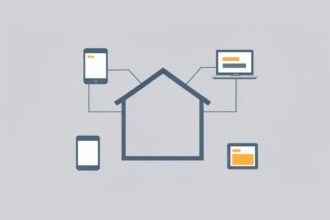
As I discused the other day in Why you need an analytical hub, enterprises need to spend time looking forward, rather than just backwards, at historical data.

As I discused the other day in Why you need an analytical hub, enterprises need to spend time looking forward, rather than just backwards, at historical data. The analytical hub is an important part of making that happen. The analytical hub must be designed properly if it’s going to allow data scientists to perform advanced analytics and predictive modeling.

In my white paper, Analytics Best Practices: The Analytical Hub, I present five design principles. The first two are below. I’ll blog about 3-5 in a subsequent post:

1. Data from everywhere needs to be accessible and integrated in a timely fashion
More Read

IoT: One of the Largest Technological Advancements Ever
5 Disruptive Technology Advancements Which Will Change Business as Usual
Managing Your Sales Funnel: How Does CRM Software Help?
Top Data Analysts Must ‘Speak the Language of the Business’
More Spocky, Less Rocky

Expanding beyond traditional internal BI sources is necessary as data scientists examine such areas as the behavior of a company’s customers and prospects; exchange data with partners, suppliers and governments; gather machine data; acquire attitudinal survey data; and examine econometric data. Unlike internal systems that IT can use to manage data quality, many of these new data sources are incomplete and inconsistent forcing data scientists to leverage the analytical hub to clean the data or synthesize it for analysis. 

Advanced analytics has been inhibited by the difficulty in accessing data and by the length of time it takes for traditional IT approaches to physically integrate it. The analytical hub needs to enable data scientists to get the data they need in a timely fashion, either physical integrating it or accessing virtually-integrated data. Data virtualization speeds time-to-analysis and avoids the productivity and error-prone trap of physically integrating data.

2. Building solutions must be fast, iterative and repeatable

Today’s competitive business environment and fluctuating economy are putting the pressure on businesses to make fast, smart decisions. Predictive modeling and advanced analytics enable those decisions to be informed.  Data scientists need to get data and create tentative models fast, change variables and data to refine the models, and do it all over again as behavior, attitudes, products, competition and the economy change. The analytical hub needs to be architected to ensure that solutions can be built to be fast, iterative and repeatable.

TAGGED:analytical hubbusiness intelligencesystem architecture
Share This Article
Facebook Pinterest LinkedIn
Share

Follow us on Facebook

Latest News

Flat editorial illustration: The article's core relationship is the hypervisor as the abstraction layer that makes hybrid cloud p
7 Best Virtualization Platforms for Hybrid Cloud Environments
Big Data
Flat editorial illustration: The article's core relationship is between aggregated workplace data (occupancy, environmental, feed
How Businesses Can Use Workplace Data to Create Better Office Environments
Big Data Business Intelligence Exclusive
Flat editorial illustration: The article's core relationship is the engineering transition from an AI prototype to a production-r
From AI Prototype to Production: Observability and Scalability Requirements for Data-Heavy SaaS Applications
Artificial Intelligence Exclusive
Preparing Data Systems and Governance for a Scaling Global Gaming Brand -- AI-generated illustration
Preparing Data Systems and Governance for a Scaling Global Gaming Brand
Big Data Infographic

Stay Connected

1.2KFollowersLike
33.7KFollowersFollow
222FollowersPin

You Might also Like

Why Predictive Analytics is Important and More
AnalyticsBest PracticesBusiness IntelligenceData MiningDecision ManagementModelingPredictive AnalyticsStatistics

Why Predictive Analytics is Important and More

7 Min Read
Hadoop pushes, pulls Big Data analytics into mainstream (Part Two)
AnalyticsBusiness IntelligenceCommentaryData VisualizationData WarehousingDecision ManagementHadoopKnowledge Management

Hadoop pushes, pulls Big Data analytics into mainstream (Part Two)

8 Min Read
Demystifying Hadoop: Not All Problems Are Hadoop-able
Big Data

Demystifying Hadoop: Not All Problems Are Hadoop-able

6 Min Read
Big Data, Unstructured Information Analysis is More Than Sentiment.
Business IntelligenceExclusiveKnowledge ManagementPredictive AnalyticsSentiment AnalyticsUnstructured Data

Big Data, Unstructured Information Analysis is More Than Sentiment.

4 Min Read

SmartData Collective is one of the largest & trusted community covering technical content about Big Data, BI, Cloud, Analytics, Artificial Intelligence, IoT & more.

AI chatbots
AI Chatbots Can Help Retailers Convert Live Broadcast Viewers into Sales!
Chatbots
Chatbots and SEO: How Can Chatbots Improve Your SEO Ranking?
Artificial Intelligence Chatbots Exclusive

Quick Link

  • About
  • Contact
  • Privacy
Follow US
© 2008-26 SmartData Collective. All Rights Reserved.
Welcome Back!

Sign in to your account

Username or Email Address
Password

Lost your password?