We use cookies, including third-party cookies from Google to serve personalized ads through AdSense, to operate this site and understand how it is used. By continuing to browse, you accept this use. See our Privacy Policy and Terms of Use for details, including how to opt out of personalized advertising.
Accept
SmartData CollectiveSmartData Collective
  • Analytics
    AnalyticsShow More
    What Kind of Problem-Solving Distinguishes Data Analysts From Software Engineers -- AI-generated illustration
    What Kind of Problem-Solving Distinguishes Data Analysts From Software Engineers
    7 Min Read
    chatgpt image jul 21, 2026, 04 34 30 pm
    4 Core Benefits of Predictive Maintenance after Vibration Analysis
    10 Min Read
    How Does Data Mining Boost Customer Satisfaction in Logistics? Harnessing Analytics for Results -- AI-generated illustration
    How Does Data Mining Boost Customer Satisfaction in Logistics? Harnessing Analytics for Results
    11 Min Read
    chatgpt image jul 13, 2026, 04 23 45 pm
    How Data Analytics Helps Companies Improve User Engagement
    19 Min Read
    chatgpt image jul 13, 2026, 03 59 46 pm
    How Data Analytics Improves Multi-Location Search Strategies
    10 Min Read
  • Big Data
  • BI
  • Exclusive
  • IT
  • Marketing
  • Software
Search
© 2008-25 SmartData Collective. All Rights Reserved.
Reading: Big Data = Big Money: The ROI of Business Intelligence
Share
Notification
Font ResizerAa
SmartData CollectiveSmartData Collective
Font ResizerAa
Search
  • About
  • Help
  • Privacy
Follow US
© 2008-23 SmartData Collective. All Rights Reserved.
SmartData Collective > Data Management > Best Practices > Big Data = Big Money: The ROI of Business Intelligence
Best PracticesBig DataBusiness IntelligenceCommentaryDecision ManagementExclusiveNews

Big Data = Big Money: The ROI of Business Intelligence

Charles Settles
Charles Settles
4 Min Read
Big Data = Big Money: The ROI of Business Intelligence
Illustration generated with Qwen Image.
SHARE

The ‘Big Data’ revolution is here; companies are collecting data on transactions, interactions, and every metric imaginable. However, such undertakings aren’t cheap. Massive data collection can have massive costs. Which begs the question – how can companies guarantee ROI for their business intelligence efforts?

In today’s business environment, moving slowly to leverage new technology can be a death sentence. Almost as damaging is the adoption of poorly understood technology in order to not “fall behind” competitors, which often results in huge spending and little to no financial return. It seems like a simple statement, but “‘Big Data’ equals ‘Big Money’” can have opposite meanings for similar people. To one executive, the money spent on data collection efforts is a ‘big’ reason to not get involved. To another executive, ‘big’ refers to the money that can be made through efficiently leveraging data resources to reveal hidden business intelligence. They’re both right. According to a 2013 Wikibon study, companies receive 55 cents in return for each dollar invested in data analysis and business intelligence efforts. In other words, companies are losing 45 percent of their investment in data analysis – hardly a recipe for success. A contrasting study from McKinsey on Marketing and Sales determined that consumer-facing businesses can increase the return on investment (ROI) of their marketing efforts by 10-20 percent through increased investment in data collection and analysis. Globally, this increased the sales of the consumer-facing businesses profiled in the study by $200 billion. The McKinsey study also revealed that companies labeled “Big Data leaders” are five percent more productive and six percent more profitable than their competitors. The contrasting results of these studies reveals the existence of ‘right’ and ‘wrong’ ways of leveraging data, and that a great many companies are doing it wrong. According to business intelligence advisors such as SAS Analytics, “ultimately data governance is not about the data. It’s about how better control and management of data enables business strategy, improves business outcomes, and reduces risk.” In a data-driven reimagining of a famous JFK quote: “ask not what your data can do for you, ask what you can do with your data.” Simply aggregating data isn’t enough. Companies must collect the right information. Data that isn’t actionable can only impact the bottom line negatively. Collection of non-actionable data can kill an analysis effort before it begins. To prevent such a failure, companies suffering from data collection sticker-shock can reduce their costs by incorporating data analysis into every aspect of their operations. Data analysis and its impact on an organization must be an organic part of the business decision-making process in order to be effective. Numerous case studies from business intelligence vendors show how companies leverage collected data to add value. From the call center that reduced their average handling times and repurposed $1.1 million dollars in annual salaries for a multi-million dollar savings, to the hospitals using data analysis to capture revenue leakage from under-billed services, data analysis can have a huge impact on companies’ bottom lines. In short, ‘Big Data’ is ‘Big Money’ in many ways. To ensure that they see said ‘Big Money’ in their ledgers, companies must approach data analysis in the same way that a data strategist does: in an intentional, organized manner.


Share This Article
Facebook Pinterest LinkedIn
Share

Follow us on Facebook

Latest News

Flat editorial illustration: The article connects AI-generated avatar variants with disciplined, measurable video experiments. A
How to Use an AI Avatar Generator to Run Measurable Video Experiments
Artificial Intelligence Exclusive
Flat editorial illustration: The article’s core relationship is between growing compute density and adaptable rack hardware that
6 Details That Make a Data Centre’s Server Room Easier to Scale
Best Practices Data Management Exclusive IT
Flat editorial illustration: The article’s core relationship is a transfer of discipline from regulated laboratories to analytics
What Business Intelligence Teams Can Learn from Lab Data Governance
Business Intelligence Exclusive
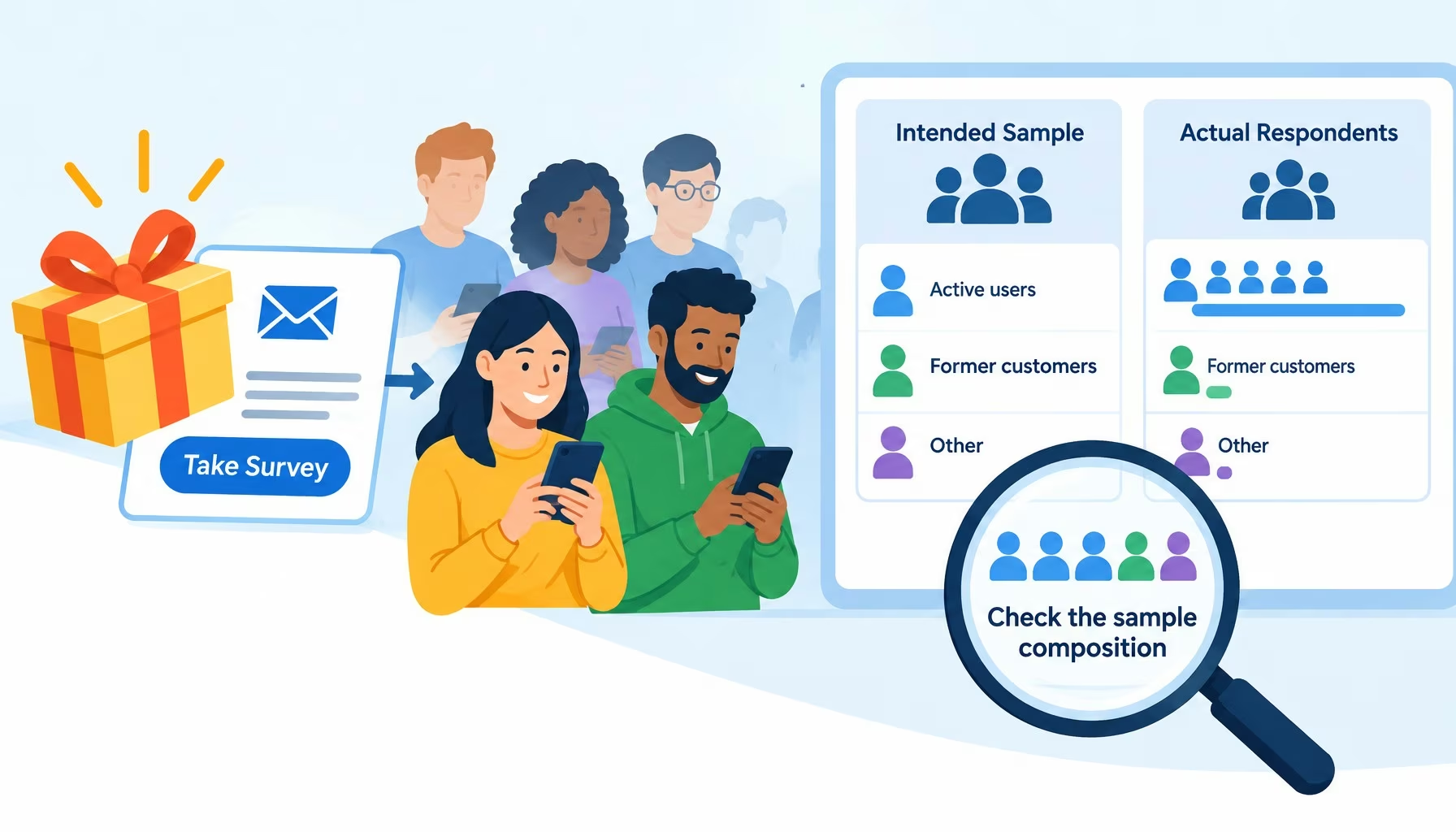
Flat editorial illustration: A guaranteed reward can raise participation while skewing the respondent pool toward active customer
Incentive-Driven Response Bias: Auditing Sample Composition Before You Trust Survey Data
Big Data Data Quality Exclusive

Stay Connected

1.2KFollowersLike
33.7KFollowersFollow
222FollowersPin

You Might also Like

The Value of Crowdsourced Insight
Business Intelligence

The Value of Crowdsourced Insight

5 Min Read
The Value Architect and Data Scientist: Are They Really New Roles?
AnalyticsBig Data

The Value Architect and Data Scientist: Are They Really New Roles?

9 Min Read
Redefining Remote Work and Ensuring Productivity with Big Data
Big Data

Redefining Remote Work and Ensuring Productivity with Big Data

5 Min Read
KANA Acquires Sword Ciboodle: My Very Long (but Insightful) Take
CRMWorkforce Data

KANA Acquires Sword Ciboodle: My Very Long (but Insightful) Take

22 Min Read

SmartData Collective is one of the largest & trusted community covering technical content about Big Data, BI, Cloud, Analytics, Artificial Intelligence, IoT & more.

5 Great Tips for Using Data Analytics for Website UX
Big Data
Artificial Intelligence for eCommerce: A Closer Look
Artificial Intelligence

Quick Link

  • About
  • Contact
  • Privacy
Follow US
© 2008-26 SmartData Collective. All Rights Reserved.
Welcome Back!

Sign in to your account

Username or Email Address
Password

Lost your password?