
We use cookies, including third-party cookies from Google to serve personalized ads through AdSense, to operate this site and understand how it is used. By continuing to browse, you accept this use. See our Privacy Policy and Terms of Use for details, including how to opt out of personalized advertising.
Accept
SmartData CollectiveSmartData Collective
  • Analytics
    AnalyticsShow More
    chatgpt image jul 21, 2026, 04 34 30 pm
    4 Core Benefits of Predictive Maintenance after Vibration Analysis
    10 Min Read
    How Does Data Mining Boost Customer Satisfaction in Logistics? Harnessing Analytics for Results -- AI-generated illustration
    How Does Data Mining Boost Customer Satisfaction in Logistics? Harnessing Analytics for Results
    11 Min Read
    chatgpt image jul 13, 2026, 04 23 45 pm
    How Data Analytics Helps Companies Improve User Engagement
    19 Min Read
    chatgpt image jul 13, 2026, 03 59 46 pm
    How Data Analytics Improves Multi-Location Search Strategies
    10 Min Read
    cybersecurity efforts
    How Behavioral Analytics and AI Are Redefining Cybersecurity for Boca Raton Businesses
    14 Min Read
  • Big Data
  • BI
  • Exclusive
  • IT
  • Marketing
  • Software
Search
© 2008-25 SmartData Collective. All Rights Reserved.
Reading: Well designed change will draw people in
Share
Notification
Font ResizerAa
SmartData CollectiveSmartData Collective
Font ResizerAa
Search
  • About
  • Help
  • Privacy
Follow US
© 2008-23 SmartData Collective. All Rights Reserved.
SmartData Collective > Uncategorized > Well designed change will draw people in
Uncategorized

Well designed change will draw people in

Editor SDC
Editor SDC
5 Min Read
Well designed change will draw people in
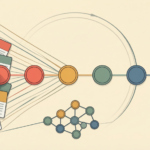
Illustration generated with FLUX.1 [schnell] via Cloudflare Workers AI.
SHARE

There’s a reason Tim Brown, CEO of the design firm IDEO, titled his book, Change by Design. There’s a reason Roger Martin, dean of the Rotman School of Management, titled his book, The Design of Business: Why Design Thinking is the Next Competitive Advantage.

Why? Because successful change happens by design.

Whether the change is a new product, service, process, or a massive cultural change, well designed changes are amazingly competent. A well designed change will draw people in.  Where businesses fail is when they roll out a change with little or no involvement from those impacted and then wonder why there people are resisting the change. That’s where design thinking comes in. Effectively engaging people requires a set of tools.

More Read

A Little Too Literal (or, How to Teach Innovation)
Globalizing the business is the key to outsourcing today
Thoughts on APIs – IB, Lime, WEX
The Rise of Embedded BI
Data Breach Reporting: A Job Killer or Business Saver?

So what is design thinking?

The term design thinking is a bit misleading. When I first heard the term my mind went to eclectic chairs, software design, mechanical design, architectural design, and so on. I definitely didn’t think about design as a competitive advantage when formulating strategy, problem solving, or tackling business issues. In layman terms design thinking is a way to solve problems so we as brazen change leaders can design successful change. I would much rather have a set of tools that help me engage people in change than have to manage resistance. No doubt, you need both, but managing resistance is no fun. Designing change that people ‘get’ is a much better space to be in.

Case in point, Procter & Gamble (P&G). In 2000 P&G missed Wall Street expectations two quarters in a row. On June 8, 2000, the board appointed A.G. Lafley as CEO. Lafley knew that the only way to remain competitive against brands that were taking market share was to become more innovative. Lafley appointed Claudia Kotchka as the first vice president for design strategy and innovation. Her challenge: embed design and innovation into the P&G culture. A massive challenge involving massive change. Kotcha turned to thought leaders in the design world − IDEO, Roger Martin, Patrick Whitney, and David Kelley. P&Gs success speaks for itself.

I share this story because change succeeds when change leaders come together and use the tools of a designer to engage people to participate in the change. The methodology and tools of design thinking are a way to create change, a way to move forward intentionally. Kotcha used the tools of designers at P&G to realize successful, massive change.

TAGGED:change by designdesign thinking
Share This Article
Facebook Pinterest LinkedIn
Share

Follow us on Facebook

Latest News

Flat editorial illustration: The article's core relationship is that reliable eCommerce attribution depends on a unified, well-st
How eCommerce Data Teams Can Build Attribution That Holds Up
Big Data Exclusive
Flat editorial illustration: The article's core relationship is the contrast between fragmented inherited data infrastructure (wh
Data Stack Consolidation as a Data Quality and Governance Strategy for Mid-Market Teams
Big Data Exclusive
Emergency responder and nurse reviewing tablet with data dashboards
Evaluating Workforce Assessment Tools: Looking Beneath the Dashboard at Psychometric Data
Exclusive Software
Flat editorial illustration: The article's core relationship is the brand protection response workflow: detection of a phishing o
Data & AI Architecture Focus: 6 Best Brand Protection Tools for Phishing and Impersonation
IT Security

Stay Connected

1.2KFollowersLike
33.7KFollowersFollow
222FollowersPin

You Might also Like

#27: Here's a thought...
Data MiningData Warehousing

#27: Here’s a thought…

9 Min Read
SWITCH & Lead Change by Design: A Comparison
Uncategorized

SWITCH & Lead Change by Design: A Comparison

5 Min Read

SmartData Collective is one of the largest & trusted community covering technical content about Big Data, BI, Cloud, Analytics, Artificial Intelligence, IoT & more.

AI chatbots
AI Chatbots Can Help Retailers Convert Live Broadcast Viewers into Sales!
Chatbots
From Bolts to Bots: How AI Is Fortifying the Automotive Industry
Artificial Intelligence

Quick Link

  • About
  • Contact
  • Privacy
Follow US
© 2008-26 SmartData Collective. All Rights Reserved.
Welcome Back!

Sign in to your account

Username or Email Address
Password

Lost your password?