
We use cookies, including third-party cookies from Google to serve personalized ads through AdSense, to operate this site and understand how it is used. By continuing to browse, you accept this use. See our Privacy Policy and Terms of Use for details, including how to opt out of personalized advertising.
Accept
SmartData CollectiveSmartData Collective
  • Analytics
    AnalyticsShow More
    chatgpt image jul 21, 2026, 04 34 30 pm
    4 Core Benefits of Predictive Maintenance after Vibration Analysis
    10 Min Read
    How Does Data Mining Boost Customer Satisfaction in Logistics? Harnessing Analytics for Results -- AI-generated illustration
    How Does Data Mining Boost Customer Satisfaction in Logistics? Harnessing Analytics for Results
    11 Min Read
    chatgpt image jul 13, 2026, 04 23 45 pm
    How Data Analytics Helps Companies Improve User Engagement
    19 Min Read
    chatgpt image jul 13, 2026, 03 59 46 pm
    How Data Analytics Improves Multi-Location Search Strategies
    10 Min Read
    cybersecurity efforts
    How Behavioral Analytics and AI Are Redefining Cybersecurity for Boca Raton Businesses
    14 Min Read
  • Big Data
  • BI
  • Exclusive
  • IT
  • Marketing
  • Software
Search
© 2008-25 SmartData Collective. All Rights Reserved.
Reading: OLAP is Dead (Long Live Analytics)
Share
Notification
Font ResizerAa
SmartData CollectiveSmartData Collective
Font ResizerAa
Search
  • About
  • Help
  • Privacy
Follow US
© 2008-23 SmartData Collective. All Rights Reserved.
SmartData Collective > Analytics > Predictive Analytics > OLAP is Dead (Long Live Analytics)
Business IntelligencePredictive Analytics

OLAP is Dead (Long Live Analytics)

Timo Elliott
Timo Elliott
5 Min Read
OLAP is Dead (Long Live Analytics)
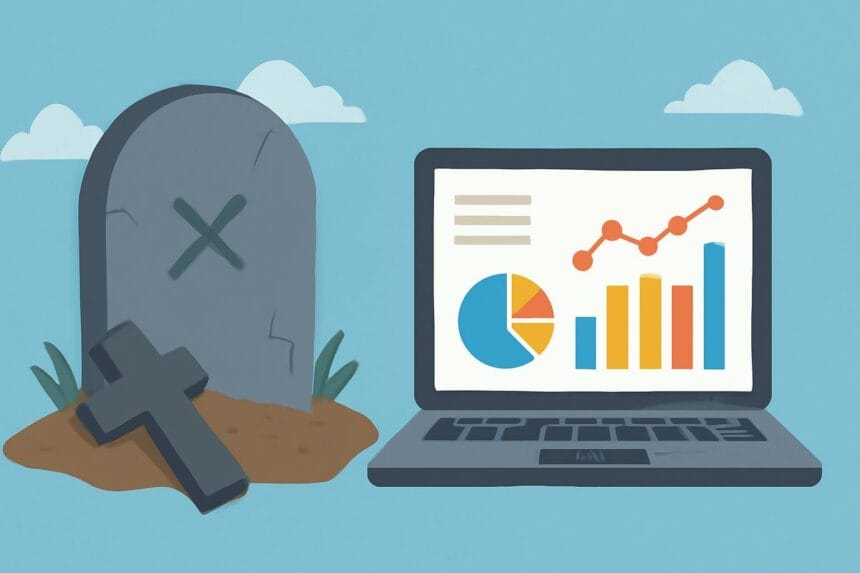
Illustrative image generated with OpenAI gpt-image-1.
SHARE


olap_is_dead_banner

The term OLAP or Online Analytic Processing was coined in 1993 by relational database technology pioneer Ted Codd (my claim to fame: we went to the same high school, Poole Grammar).

The term was chosen to contrast with OLTP or online transaction processing, and was prompted by some clever marketing folks at Essbase, who wanted to promote their multidimensional database product. Codd was famous for his twelve rules defining the relational model and duly came up with twelve rules for analytic systems.

The term was quickly taken up by the rest of the industry, and spawned new definitions (Nigel Pendse’s FASMI test) and multiple variations (MOLAP, HOLAP, ROLAP, Huey, Dewie and Louie, etc.).

More Read

The Go/No-Go Decision Pattern
We Need A Smarter Grid
Embracing and Communicating Uncertainty: Model Enabled Analysis and a Modeler’s Hippocratic Oath
The Goldman Sachs SaaS scorecard
Fascinating Ways AI is Intersecting with Video Marketing

Over time, these multiple definitions started muddying the meaning of the term (was it a technology? a user interface? an approach to analysis?), and Gartner decreed that it was ‘just’ part of a larger market called business intelligence. The result has been a long slow decline of the use of the term OLAP, as the Google Trends chart below indicates.

image

Only Nigel Pendse of the OLAP Report tried to side-step this trend, and continued producing OLAP-specific analysis for many years, but “business intelligence” was clearly the mainstream industry term. A few years ago, Nigel sold the OLAP Report to the German BARC group, who initially continued under the same name, and tried vainly to convince everybody that OLAP was still a “hip term,” but finally succumbed to the inevitable and announced last month that they would be changing the name of the report/site to The BI Verdict.

(Sadly, at some point in this process, BARC decided to lock one of Nigel’s best articles — “How not to buy a BI product” – behind their subscription firewall. All I can find on the web is a far-less-entertaining summary of the main points here.)

Since BARC were the last group using the term with any frequency, it’s now fairly safe to say that OLAP’s days are over, but interestingly, the group seems to have chosen to shift to the wrong term. The chart below shows that the search trend for “business intelligence” has been slowly drifting down over the last five years.

image

And the decline is even more pronounced for another standard industry term, “performance management”:

image

Since BI and performance management remain fast-growing markets, this trend is a little surprising – until you look at the search figures for the term analytics. Starting in 2005 (perhaps prompted by the introduction of Google Analytics?), the term has skyrocketed in use.

image

Possible reasons for this may include:

  • Popular books and articles aimed as business people tend to use the term, such as Thomas Davenport’s 1997 book “Competing on Analytics.” This is perhaps because there’s more ambiguity for a business audience, who associate the term “business intelligence” with industry data vendors like Reuters and Thomson (now both part of the same company).
  • The acquisition of the mainstream BI vendors by larger organizations (Hyperion by Oracle, Cognos by IBM, and BusinessObjects by SAP) has meant that the industry has been increasingly using other, more generic terms, such as “embedded analytics” and “analytic applications” to explain the same functionality. And the largest remaining independent vendor, SAS, has proclaimed themselves the leader in “business analytics”

My conclusion? By the time you read this, this blog might well be called “Analytic Questions” instead of “BI Questions”…

[Post to Twitter] Was this interesting? Share with others on Twitter with automatic URL shortening! 

TAGGED:analyticsbusiness intellgencenigel pendseolapperformance managementted codd
Share This Article
Facebook Pinterest LinkedIn
Share

Follow us on Facebook

Latest News

The New Zlibrary Official Domain Makes The Website Address Different -- AI-generated illustration
How Search Engine Indexing Lags Behind Large-Scale Website Domain Migrations
News
How Great Content Moves Through A Marketing Ecosystem -- AI-generated illustration
How Great Content Moves Through A Marketing Ecosystem
Exclusive Infographic Marketing
What Your Brand Misses That Data Reveals -- AI-generated illustration
What Your Brand Misses That Data Reveals
Big Data Exclusive Infographic
5 Common Mistakes Businesses Make During the Risk Assessment Process -- AI-generated illustration
5 Common Mistakes Businesses Make During the Risk Assessment Process
Business Intelligence Exclusive Risk Management

Stay Connected

1.2KFollowersLike
33.7KFollowersFollow
222FollowersPin

You Might also Like

google nexus BI lesson
Uncategorized

4 Retail BI Lessons to Learn from Google’s Nexus Fail

5 Min Read
The Commoditization of Analytics
Business IntelligenceData MiningPredictive Analytics

The Commoditization of Analytics

7 Min Read
OLAP Cask Principle Reveals the Future for OLAP Tools Manufacturer
Data Visualization

OLAP Cask Principle Reveals the Future for OLAP Tools Manufacturer

11 Min Read
The State of Analytics Across Asia
Business Intelligence

The State of Analytics Across Asia

11 Min Read

SmartData Collective is one of the largest & trusted community covering technical content about Big Data, BI, Cloud, Analytics, Artificial Intelligence, IoT & more.

ai chatbot
How AI Website Chatbots Improve Customer Support and Lead Generation
Chatbots Exclusive
ai in ecommerce
Artificial Intelligence for eCommerce: A Closer Look
Artificial Intelligence

Quick Link

  • About
  • Contact
  • Privacy
Follow US
© 2008-26 SmartData Collective. All Rights Reserved.
Welcome Back!

Sign in to your account

Username or Email Address
Password

Lost your password?